TIRTIR Tinted Skin Glow Cushion is aimed at a sheer, glowy base rather than the more covered-up look many people associate with a cushion foundation. I would shortlist it if I wanted to soften the overall look of my complexion while leaving plenty of skin visible. If hiding marks is the main job, I would start with a fuller-coverage option instead.
TIRTIR is a Korean beauty brand with several cushion foundations. Skin Glow is the sheer, luminous option discussed here. A cushion is simply a compact with product and an applicator inside; it can hold a light tint or a much more covering foundation.
What sheer coverage means in practice
Skin Glow offers sheer, buildable coverage with a luminous finish. Think of it as an all-over tint that evens the general look of the complexion while allowing freckles and skin texture to remain visible.
Natural-looking makeup can mean two different things: letting freckles and skin show through, or covering marks while keeping the makeup layer subtle. Skin Glow's sheer coverage fits the first aim more directly. If you want the second, a more covering formula applied only where needed may suit you better.
I would choose Skin Glow for the overall finish and use a separate concealer where a particular mark needs more attention. That separates a small coverage job from the rest of the face. Building the same light base everywhere just to hide one area can work against the reason you chose a sheer finish in the first place.
Add a little more where you want it, but choose a fuller-coverage cushion if covering marks across the face is your everyday preference. Our TIRTIR Red-versus-Skin Glow comparison helps make that choice.
Why a light base still needs the right shade
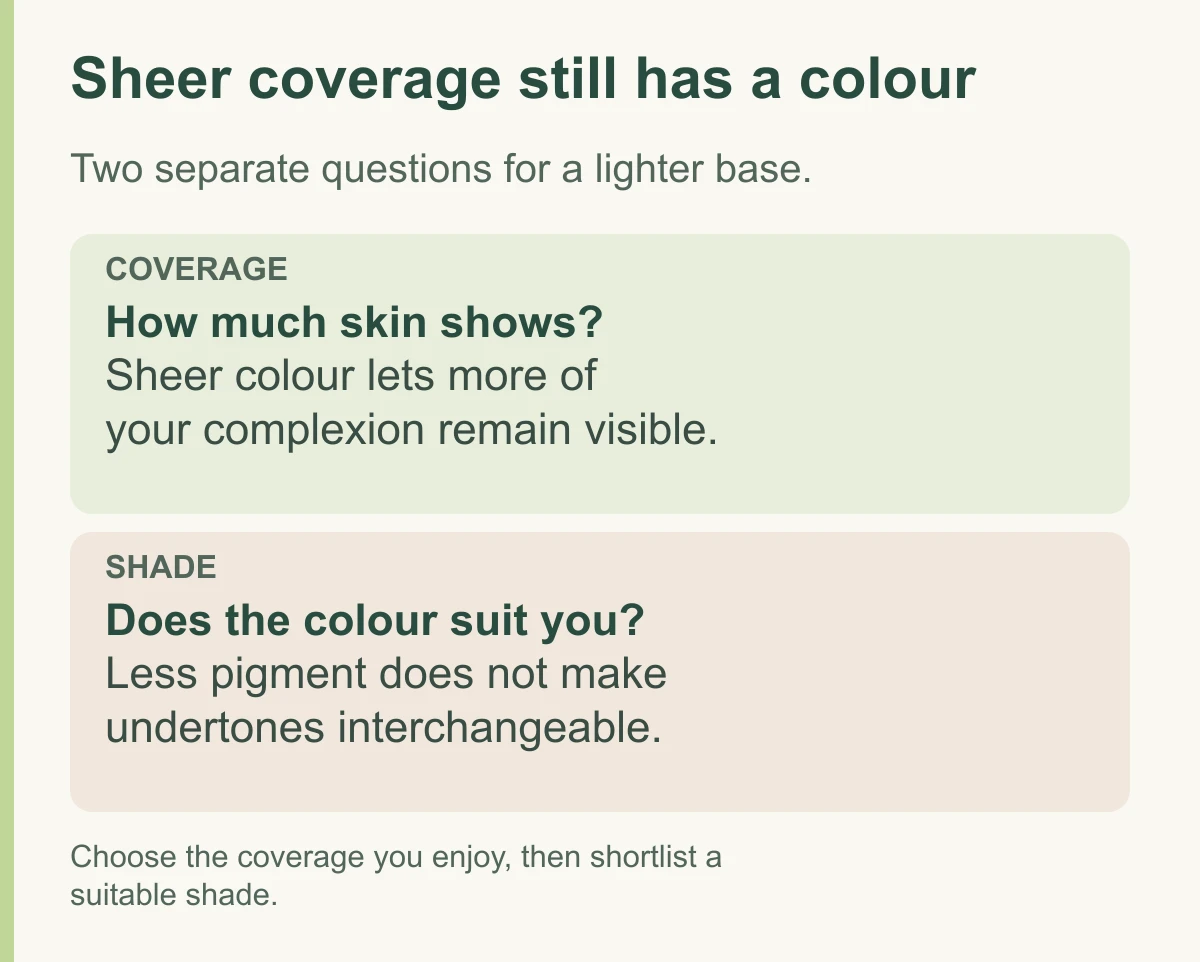
Coverage asks how much of your skin remains visible. Shade asks whether the colour sitting over it suits you. Reducing the amount of visible pigment does not make a pink, golden or olive undertone interchangeable.
Even a thin tint can make your face look pinker, more yellow or greyer than your neck if the undertone is wrong. Less product can make the difference less obvious, but choosing a closer colour match is the better starting point.
I would first shortlist the approximate depth, then compare the undertone descriptions and swatches for this exact cushion. A shade name from another TIRTIR formula is a clue to investigate, not a promise of identical colour. Likewise, a number that worked in another brand is not a measurement shared by every cushion maker.
Online swatches help narrow a shortlist, especially when you compare several shades on the same person in the same lighting. They cannot guarantee a match on your face. If physical samples are available, checking the face-to-neck transition in daylight is more useful than picking the lightest shade and expecting sheer coverage to do the rest.
What does the 73% serum-base claim tell us?
TIRTIR says the formula contains a 73% serum base and highlights hyaluronic acid and panthenol. Hyaluronic-acid ingredients are used to hold water; panthenol is used for moisturising and skin-conditioning support. These are reasons for the skincare-style positioning, not a statement that 73% of the cushion is pure hyaluronic acid or panthenol.
The percentage refers to the serum-base mixture, not to the amount of an individual active ingredient. I would treat it as part of the moisturising makeup concept and choose the cushion on its coverage, finish and shade. Those tell you much more about whether it is the base you want to wear.
Keep the moisturiser your skin needs underneath and finish skincare with sunscreen. The cushion adds colour and finish to that routine. Our cushion-SPF guide explains why a makeup layer is not a substitute for your usual sun protection.
Make the choice around the finish you enjoy
If you like visible glow across the complexion, Skin Glow's positioning makes sense. If you prefer a matte surface, the luminous finish is a reason to look elsewhere rather than a problem to spend the rest of the routine cancelling out.
If you like glow on the cheeks but less shine through the centre of the face, use powder only in the areas you want to soften. You can choose where to keep the radiance rather than powdering the whole face and losing the finish that drew you to the cushion.
Let your usual skincare settle, pick up a small amount with the puff and pat on a thin layer. Add a little more only where you want extra coverage. Pressing and patting gives you more control over that light starting layer than repeatedly sweeping a loaded puff across your face.
Which listing are you actually looking at?
The global brand page currently presents 30 shades. The existing Olive Young Global listing I checked offers 10 shades and set or single options. That is a shopping distinction worth knowing: a shade shown by the brand may not be offered in that particular listing. Choose a shade that suits you, rather than accepting the wrong undertone for the finish.
These are affiliate links. I may earn a commission if you buy through them, at no extra cost to you.
The existing TIRTIR Tinted Skin Glow listing at Olive Young Global contains set and single options. Check the selection rather than assuming a refill or a particular shade is included.
I would choose Skin Glow for a sheer, luminous base and use concealer only where I wanted extra coverage. If covering marks across the face is the priority, I would choose a fuller-coverage cushion. Match the coverage, finish and shade to the look you want; the serum percentage is a supporting detail.