The 2026 FDA decision on bemotrizinol gives US sunscreen makers another ingredient to formulate with. For someone buying Korean sunscreen in Europe, its immediate significance is smaller: a filter already used abroad has gained a route into the US over-the-counter system. It has not suddenly become a new invention, and the decision does not clear every existing Korean sunscreen for the American market.
That distinction is the interesting part of the story. Much of the excitement is about access to an ingredient, while consumers are understandably thinking about the bottle they can buy.
What the FDA actually changed
Bemotrizinol is an organic UV filter that absorbs both UVA and UVB. On an ingredient list, look for Bis-Ethylhexyloxyphenol Methoxyphenyl Triazine. Tinosorb S is one supplier trade name; it is not a separate filter to count alongside bemotrizinol.
The FDA announced the decision on 9 June 2026, describing its first addition of a sunscreen active ingredient in more than 20 years. The agency considers bemotrizinol generally recognised as safe and effective under the specified conditions for adults and children aged six months and older.
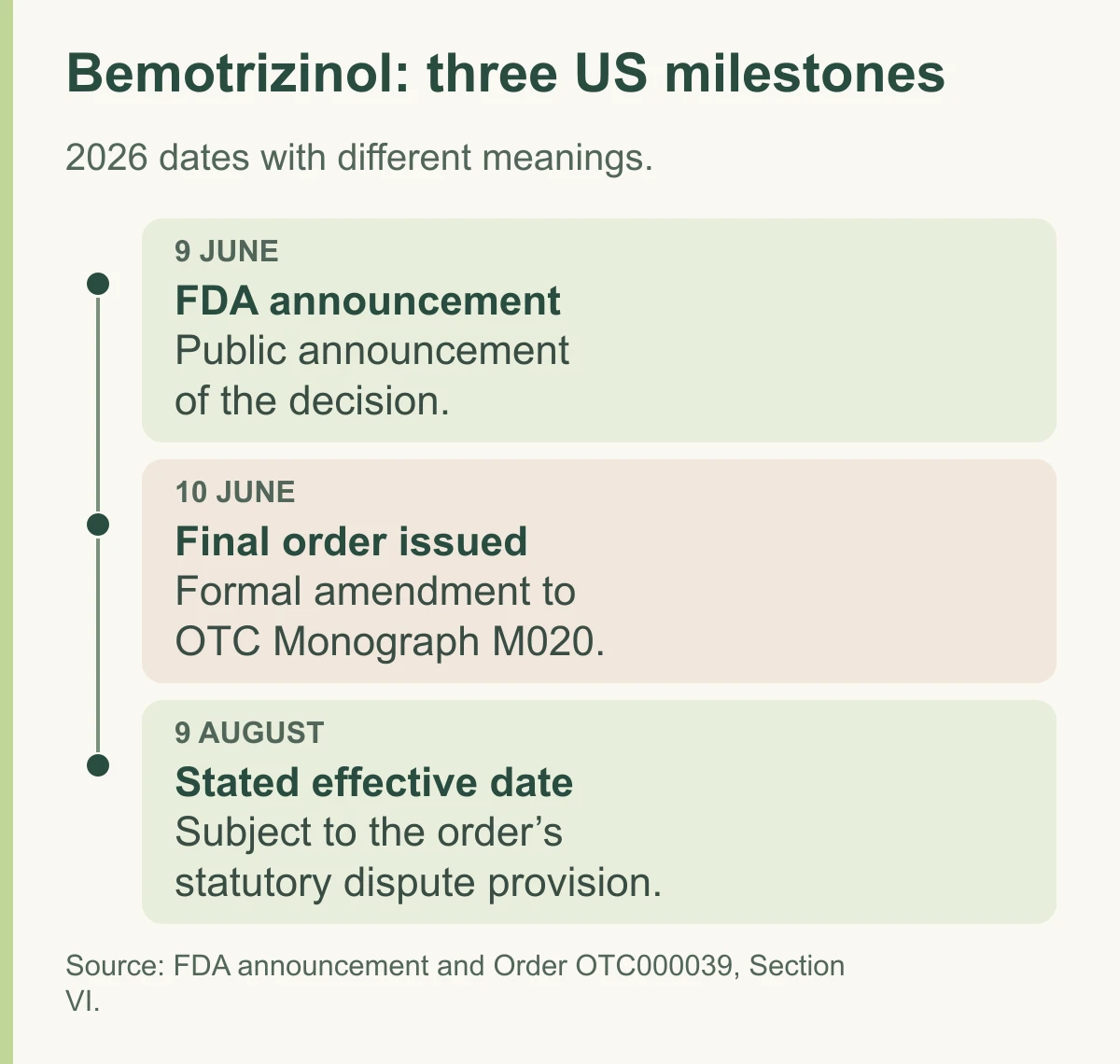
Three dates help untangle the headlines:
| Milestone | Date | What it means |
|---|---|---|
| FDA announcement | 9 June 2026 | Public announcement of the decision |
| Original final order issued | 10 June 2026 | The formal amendment to OTC Monograph M020 |
| Effective date listed in the order | 9 August 2026 | The order's stated start date, subject to its statutory dispute provision |
The final order permits bemotrizinol at concentrations up to 6%, with conditions covering combinations, product forms and finished-product requirements. The 6% is an ingredient limit, not an SPF rating or an instruction for making your own sunscreen.
Why one permitted filter does not clear a whole Korean sunscreen
Imagine a Korean sunscreen that contains bemotrizinol alongside other UV filters. This decision changes the US position on bemotrizinol. The other active ingredients, concentrations, formulation, testing and labelling still have to meet the applicable US requirements.
That is why “contains the newly permitted ingredient” and “can be sold under the US sunscreen monograph” are different claims. A manufacturer may develop a US version using bemotrizinol, rather than importing its existing Korean formula unchanged. Whether a particular brand has done so needs its own evidence.
There is a further commercial detail in the order: it provides an 18-month exclusivity period for the requestor, DSM, and the relevant licensees or successors under the stated conditions. Regulatory access does not mean unrestricted ingredient sourcing on day one.
What matters on a European shelf
The FDA itself notes bemotrizinol's longstanding European use. Its announcement therefore does not establish a new European launch date or a sudden improvement in the protection of a bottle you already own.
My reading is that this is useful news about the US catching up on a formulation option, rather than a reason to rank every Korean sunscreen above every American one. An ingredient can offer valuable properties while the complete formula still determines the product's tested protection, finish and water resistance.
For interpreting a Korean bottle, SPF, PA and the European UVA circle give you more useful protection information than counting fashionable filter names. A sunscreen intended for everyday wear and one tested for swimming also answer different needs, even when they share an ingredient.
For US formulators, this is a meaningful new option. For a European reader who already has a sunscreen they can apply properly, I would not change products because of this FDA milestone. Keep choosing the finished protection and use occasion. The news explains a market difference; it does not improve the bottle you already own overnight.