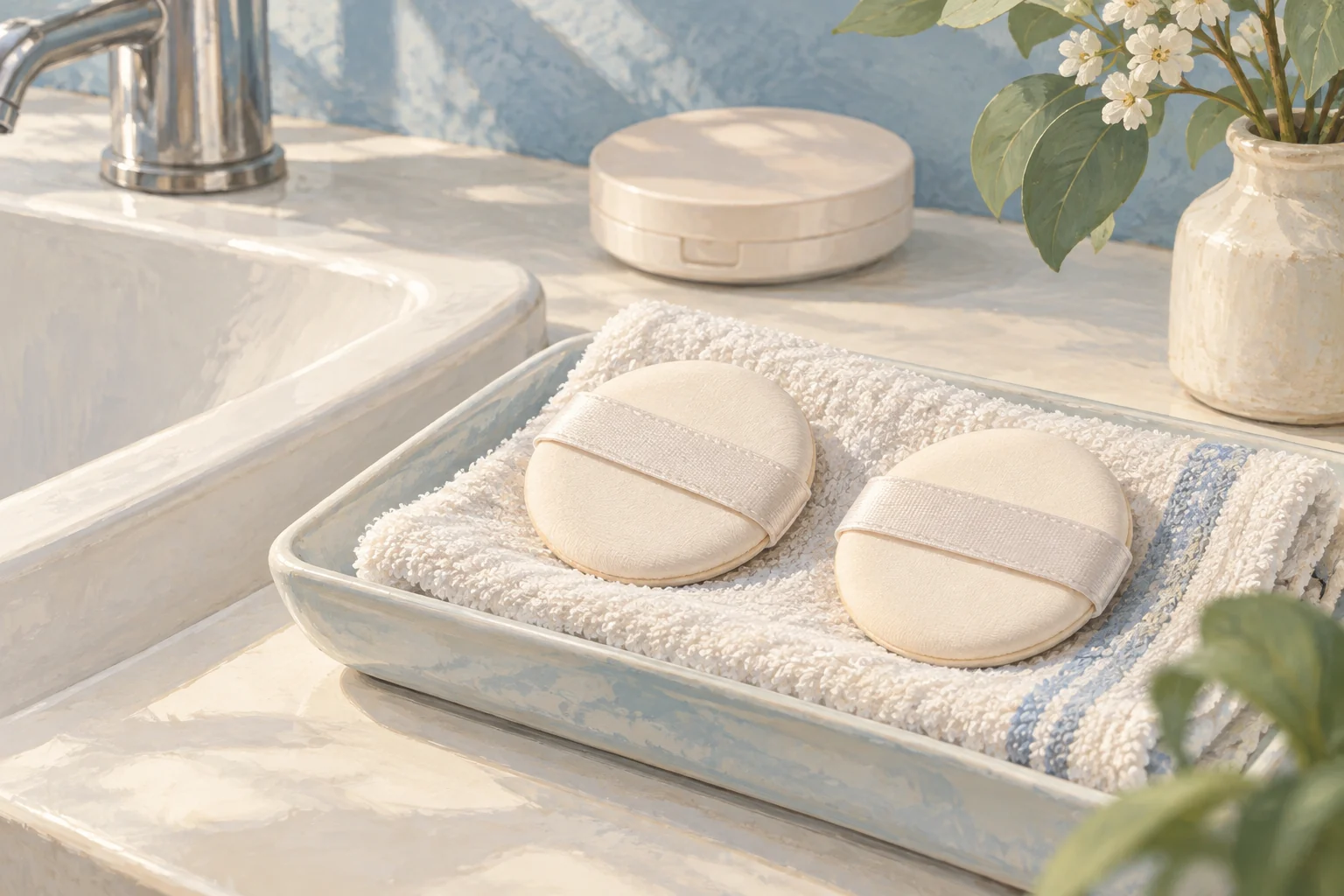
Wash a reusable cushion puff gently, rinse it thoroughly and let it dry completely before using it again. Replace it when the surface starts breaking down or it no longer comes properly clean. A fixed rule such as “buy a new one every month” is less useful than knowing how your particular puff is holding up.
Here, “puff” means the removable applicator you use to pat foundation onto your face. The sponge holding the foundation inside the compact is a separate part.
Drying is the part to plan for. If you wash your only puff at bedtime and it is still damp the next morning, you need another clean applicator. My practical recommendation is a small rotation of compatible spare puffs, so cleaning one does not mean putting it straight back into the compact while wet.
How often should you wash it?
The American Academy of Dermatology recommends cleaning makeup sponges after every use. That is general sponge hygiene advice; a cushion's thin, layered applicator also needs care suited to its material. Check whether yours is washable before choosing a cleaning method.
Repeated washing can also wear a puff out. Innisfree's No-Sebum Powder Cushion Puff instructions warn about damage from forceful rubbing or frequent washing. Handle the puff gently and replace it when necessary, rather than keeping a dirty one going indefinitely to save its surface.
If you see a seven-to-ten-day cleaning schedule, check which tool it refers to. That is the AAD's brush advice, rather than its sponge advice. A brush and the puff sitting in your compact do not share one universal maintenance calendar.
A gentle washing routine
Set out a suitable cleanser, running water and a clean towel or paper towel. If the puff came with specific care instructions, use those rather than treating every makeup applicator like a thick blending sponge.
- Work the cleanser in gently. Press and massage rather than stretching, twisting or scrubbing the puff between your nails. Concentrate on the makeup-bearing surface without pulling at the edges or finger strap.
- Rinse thoroughly. Gently press the puff as you rinse. If makeup is still coming out, repeat a gentle clean rather than attacking the remaining patch with more force.
- Press out the water. Keep its shape and press it into a clean towel. Wringing it like a dishcloth is a poor bargain if it damages the applicator you were trying to save.
- Leave it out to air dry. Give it a clean drying space and enough time. Do not close a still-damp puff inside the compact just to make the dressing table look tidy.
Innisfree specifies drying its puff in the shade. Leave enough time for yours to dry through; the surface feeling less wet is not a useful reason to rush it back into use.
When is replacing it the better choice?
I would replace a puff if its application surface is peeling, cracking or separating, or if it stays unpleasantly dirty or smells different after cleaning and drying. If it has become stiff or uneven and no longer presses makeup on properly, it has also stopped doing the job you keep it for.
A faint colour stain is a different question from loose surface damage or makeup that is still washing out. Colour alone cannot tell you how clean an applicator is. Keep the cleaning routine, inspect its condition and avoid using a calendar date as proof that a damaged puff is still fine.
Use and wear are more helpful than a universal replacement interval. Someone applying a full base every day will put a puff through a different amount of use and washing from someone who opens a cushion occasionally for a touch-up. If you prefer replacing rather than washing, choose an affordable compatible spare and replace it regularly enough to use a clean applicator. The extra cost is worth comparing with the time you actually want to spend maintaining one.
Make the routine easier to keep
A clean spare is the useful purchase here. Choose one that suits the formula and fits the compact if you carry it around. A replacement that stops the lid closing properly is not much of an upgrade.
Keep clean, dry spares apart from the puff you have just used. Wash the used one when you have finished with makeup, leave it out to dry, and take a fully dry spare next time. Add enough spares to make drying practical for your routine; there is no special number you have to own.
This is worth sorting out before deciding your cushion formula has suddenly become difficult. If the application surface is worn or loaded with old makeup, try a clean, intact puff before changing the whole base. Our cushion application guide covers the separate question of loading and pressing on the foundation itself.
My choice would be gentle cleaning, proper drying and a few useful spares over an elaborate cleaning gadget. Once a puff is damaged or no longer cleans up well, replace the puff. You do not need to replace a perfectly good cushion along with it.