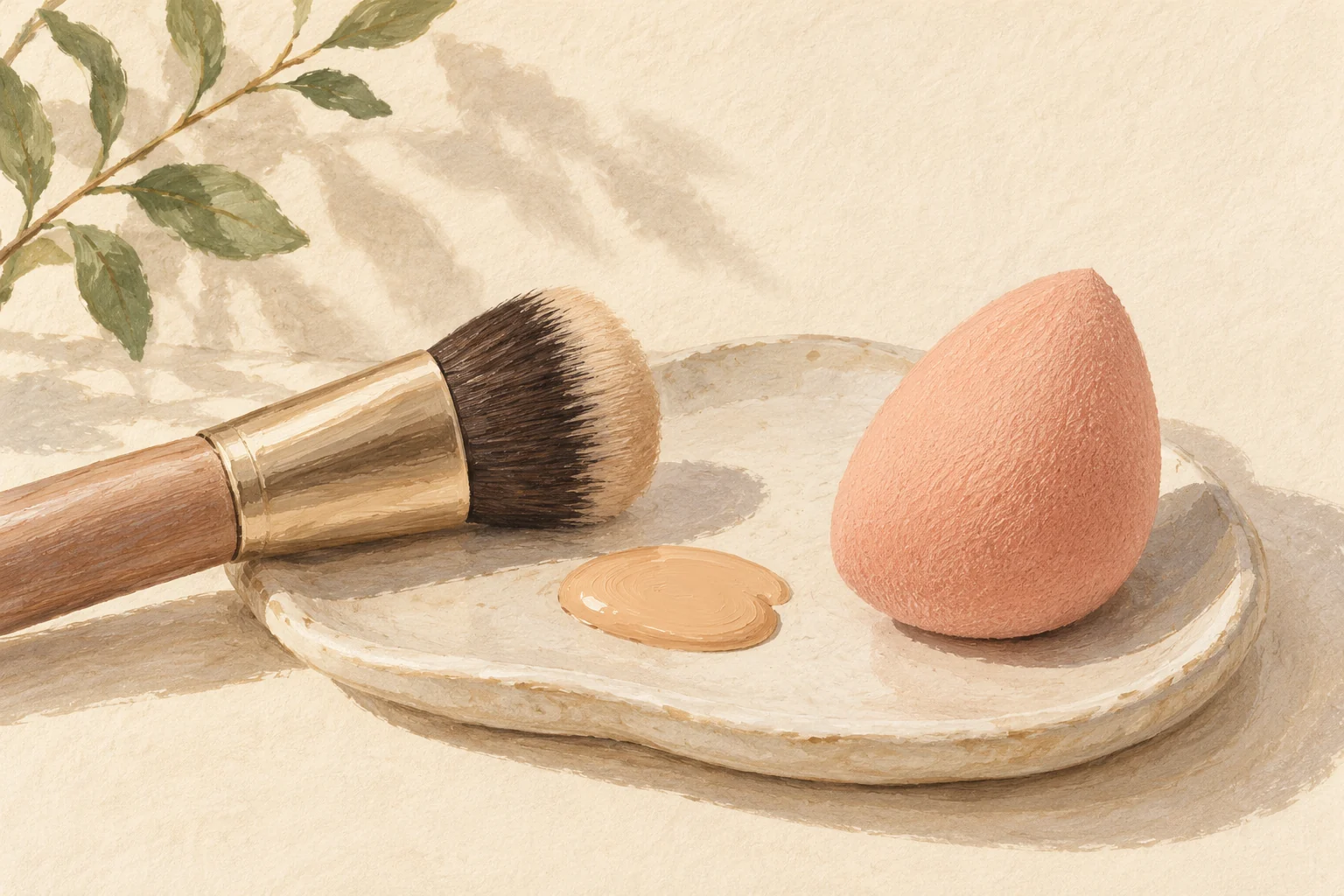
If your foundation looks streaky, heavy or uneven, the bottle may not be the first thing to replace. The amount you use, the way you move it and the tool touching the skin can change the result. A brush helps spread and place product; a sponge or puff can help press and blend it. Neither guarantees a particular finish with every formula.
Start with the problem you can see. Brush marks, too much foundation around the nose and a patch that will not cover are not the same problem, so they should not all lead to buying another foundation.
When a brush is useful
A brush gives you control over placement. You can use a small amount around the centre of the face, blend towards the edges and build coverage only where you want it. A dense brush and a looser brush will not deposit product identically, so the shape and bristle arrangement matter as much as the word brush.
If you are getting visible lines, try smaller movements and lighter pressure rather than sweeping a large amount repeatedly across the face. Real Techniques' application guide also recommends avoiding long sweeping strokes with its dense foundation brush.
A brush covered in yesterday's dried base can make a fresh application harder to judge. Clean it appropriately and let it dry completely. You want to compare the tool's behaviour, not the effect of old product caught in it.
When a sponge or puff is useful
Pressing with a suitable sponge can soften the appearance of product that has already been spread. It can be helpful around areas where a brush has left marks or where you want the layer to look less obvious.
Use a light tapping motion rather than dragging until the foundation moves away. If an area needs more coverage, add a little product there instead of loading the entire sponge again. Pressing cannot make an unlimited amount of base look thin.
Some blending sponges are designed to be dampened and squeezed out before use. Others, including specialist coated designs and many cushion puffs, have different instructions. Do not soak every tool simply because you have seen someone use a wet blending sponge. A damp sponge is also different from one that is dripping water into the base.
You can use both, but you do not have to
Spreading a thin layer with a brush and lightly pressing selected areas with a sponge can be a useful combination. It also means cleaning and drying two tools.
If one tool already gives you a finish you like, the second has no compulsory place. Before adding it, ask which problem it is going to solve. If you cannot identify one, try adjusting the amount of foundation first.
Clean fingers can also suit some formulas and routines. Choose the method that gives you the finish you want with manageable effort.
A small comparison you can actually learn from
Use the same foundation and usual skincare on a day when you have time. Apply a small amount with your current tool on one side and your alternative on the other. Keep the layer similarly thin and look at the result in ordinary light.
Notice the edges around the nose, any visible strokes and whether one side looks heavier. Then look again after normal wear. A finish that is beautiful immediately but uncomfortable by lunchtime may not be the better choice for your routine.
This comparison shows how your own tools and formula work together. It will not establish that every brush beats every sponge, but it can answer the useful question: do you need another foundation, or would a change in application do enough?
Pick for the work and the upkeep
A brush may suit you if you like controlled placement and do not mind cleaning bristles. A sponge or puff may suit you if tapping feels easier and you can give it enough drying time. A two-tool routine is reasonable if the improvement is worth the extra upkeep.
I would solve the visible problem in the smallest way first: less product for heaviness, different movements for streaks and targeted coverage for one persistent mark. The tool should make the routine easier. It should not become another reason to replace a base that already suits your skin and shade.