If you wash every makeup brush the evening before you need it, the problem may arrive the next morning: the outside looks dry, but the dense middle is still damp. Drying time deserves a place in the cleaning plan.
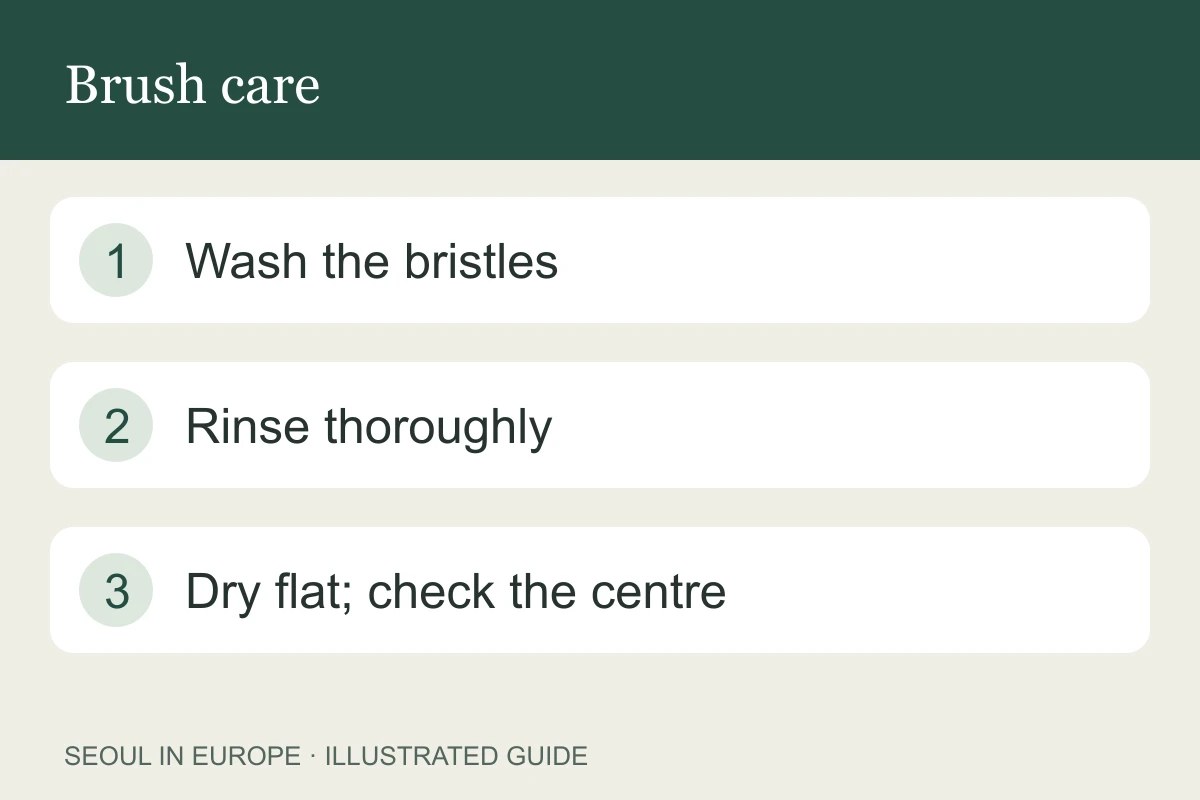
A useful cleaning routine therefore includes both removal and drying. Wash the bristles gently, rinse the cleanser out thoroughly, and leave the brushes flat with their tips clear of the edge so air can reach them. Do not put wet brushes straight back into their upright storage pot.
Clean the bristles without soaking the whole tool
The metal section between the handle and the bristles is called the ferrule. You want to remove makeup from the working end without treating the whole brush as something to leave submerged in a bowl.
The American Academy of Dermatology recommends rinsing the tips with lukewarm water, gently working in shampoo and rinsing until the water is clear. Its general washing interval is seven to ten days. Follow any more specific care directions for your brush, particularly when its fibres or construction need special handling.
Work through one brush at a time rather than leaving a handful soaking while you finish another job. Dense foundation brushes can need patient rinsing. Squeezing and rubbing harder is not a good substitute for getting the product out of the middle.
Make space before everything is wet
Set out a clean towel and a stable drying surface first. Gently remove excess water, reshape the bristles and lay the brush flat with the tips hanging beyond the edge. The AAD advises against drying upright because water can travel down towards the glued section.
There is no useful universal promise that every brush will be ready in two hours. A compact foundation brush and a loose powder brush hold different amounts of water. The room and airflow also matter. Check the centre before using a brush again, rather than judging only the dry-looking tips.
For a small everyday kit, I would wash it after the last makeup application before a day when the brushes are not needed. If you need them daily, rotate the tools rather than buying a large duplicate set automatically. One useful spare can be easier to manage than a drawer full of brushes waiting to be cleaned.
A quick wipe and a wash do different jobs
Removing visible colour between uses may help stop yesterday's blush appearing in today's makeup. It does not tell you that all the makeup and oil deeper in the bristles have been removed. Use a cleaning product according to its own directions, including any drying requirements. Avoid sharing brushes. The aim is a clean, comfortable tool, rather than a dramatic before-and-after stain photograph.
A cushion puff needs its own care routine; it does not have the same handle-and-ferrule construction. If your makeup routine uses both, plan their care separately instead of assuming one washing method suits every applicator.
The routine I would keep is the one that has a place to dry the tools and a realistic time to do it. Cleaning becomes much easier when it is part of using the brush, rather than an emergency on the morning you need it.