These are affiliate links. I may earn a commission if you buy through them, at no extra cost to you.
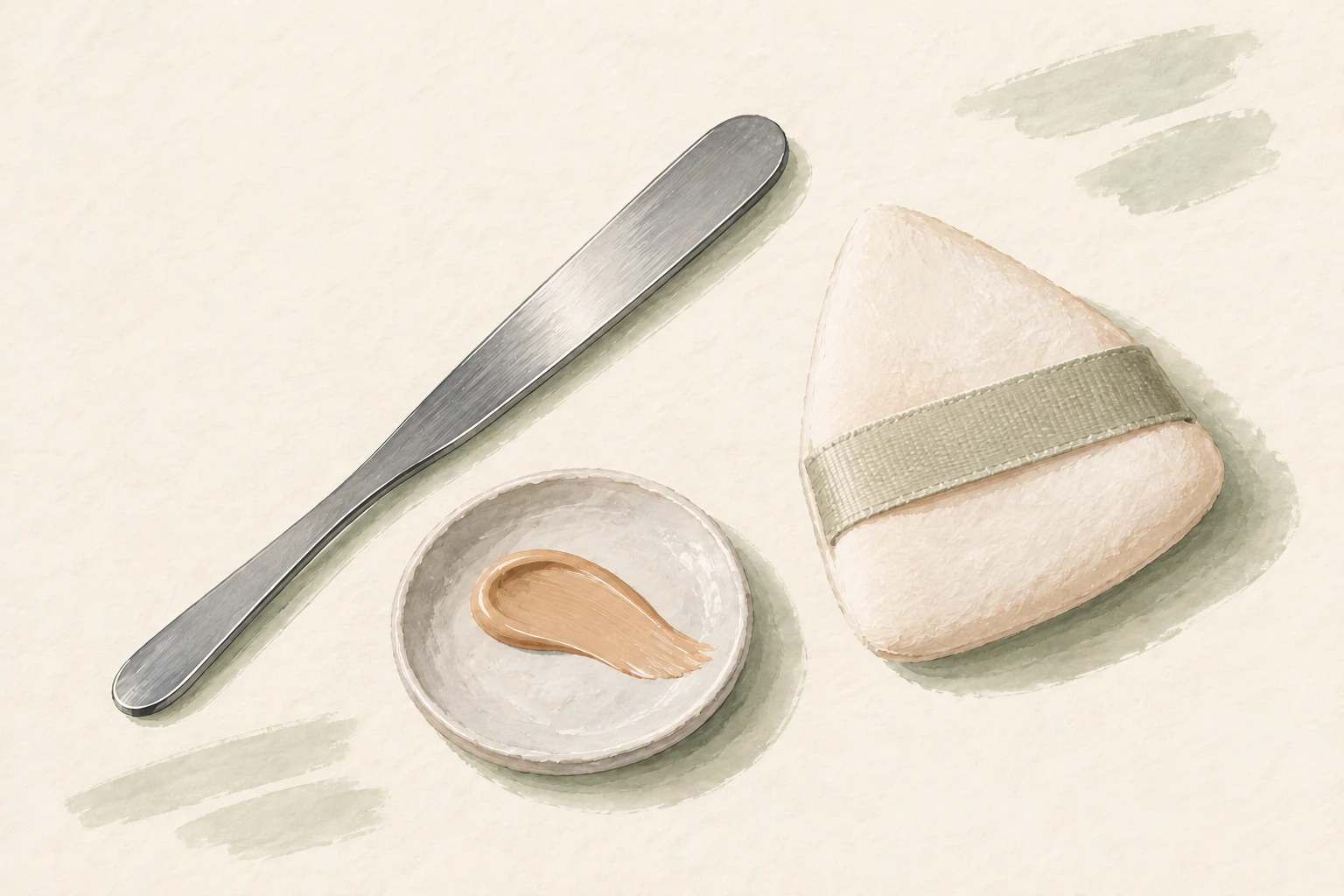
A makeup spatula can help you spread a thin layer of liquid foundation before blending it with a puff. It makes most sense if you tend to apply too much base and want more control over the first layer. If your existing sponge, brush or fingers already give you the finish you like, another tool is optional.
The important detail is the “before blending” part. The metal tool spreads the foundation; the puff still finishes the application. Once you understand those separate jobs, the Korean spatula method looks less mysterious. It also becomes easier to decide whether it suits your morning, rather than buying a piece of metal and hoping glass skin arrives with it.
What the Korean tool conversation is about
PICCASSO is a Korean makeup-tool brand, best understood here through its brushes, puffs and accessories. Its original makeup spatula was developed with Korean makeup artist Ham Kyung Sik. This is a long, narrow, blunt-edged tool designed for cosmetic application, rather than the mixing paddle you might already have on a palette.
The format has been in the Korean beauty conversation for several years. PICCASSO displays a 2023 Korea YouTuber’s Awards win in the tool category on its Korean product page, reflecting the attention it received among beauty creators.
I find the underlying idea more interesting than the award: treat the amount and distribution of foundation as a separate step from blending. The brand’s illustrated instructions show foundation being picked up on the tool, spread thinly and then pressed into the skin with a sponge or puff. The accessory belongs to a technique, not a promise that metal produces better skin.
Why spreading first can be useful
There are two different problems hidden inside “my foundation looks thick”. One is using more foundation than you want. The other is leaving it unevenly blended. A spatula mainly gives you another way to work on the first problem: place a thin amount across an area before reaching for the puff.
That can be a useful change if you habitually put a generous blob straight onto a sponge. Starting with less gives you room to add coverage where you need it, instead of carrying the same amount across the whole face. Thin application is a technique you can practise with other tools too; it is not exclusive to this one.
For me, the strongest reason to try a spatula is control over the starting layer. “It wastes absolutely no foundation” is a much bigger claim. Product can still remain on the palette, spatula or puff, and I would not buy it on a promise of zero waste. A better-controlled application is already a sensible goal.
A simple way to try the method
Start with clean tools and a small amount of liquid foundation on a clean mixing surface. Pick up a modest amount along the edge of a cosmetic makeup spatula. Follow the tool’s own instructions and keep the pressure light; you are spreading makeup, not scraping the face.
Work on one small area, then blend that area with your puff or sponge before moving on. That gives you a chance to see the coverage as you go. In a makeup-artist interview with TODAY, Tisha Thompson recommends small areas and blending as you go, with a light hand because firm spreading can disturb the layers underneath.
Once that first layer is blended, decide where more coverage belongs. Add a little there, or use concealer for a particular mark, instead of automatically repeating foundation everywhere. The aim is an even base with intentional coverage, not the thinnest possible layer regardless of what you wanted to cover.
I would practise on one cheek when you have time. There is no prize for learning a new tool five minutes before leaving. If the first attempt leaves lines, reach for the puff and adjust the amount and pressure next time rather than adding a heavy coat to conceal the tool marks.
Which base products would I pair with it?
I would start with a spreadable liquid foundation or BB cream. Those make it straightforward to try placing a thin film and blending it promptly. A very thick base that does not spread easily would be a less convenient starting point, especially while you are learning the gesture.
For a formula that sets quickly, I would work in smaller areas. Covering the whole face first and returning to blend later makes the method needlessly difficult. The spatula should help organise your application, not turn it into a race against your foundation.
A cushion foundation already supplies a way to pick up and press on small amounts. I would begin with better puff technique before adding a spatula to that routine. There is little sense in buying an extra tool for thin application while continuing to overload the original puff.
Who gets enough value from the extra step?
I would shortlist a spatula for someone who likes liquid foundation, wants a light overall base with more targeted coverage and enjoys adjusting technique. Separating spreading from blending gives you a specific task to practise. The extra tool has a job rather than being another accessory in search of one.
I would keep a brush, sponge or fingers if speed matters most, or if your current application is already easy and consistent. The spatula method usually means preparing a surface, spreading, blending and cleaning another tool. That is a real addition to the routine, even when the metal itself is easy to wipe down.
I would not drag it across irritated or broken skin, or press harder to make the base smoother. A cosmetic tool cannot flatten skin texture into a filter. Choose the method that lets you apply comfortably; forcing this particular gesture defeats its purpose.
The tool discussed here
These are affiliate links. I may earn a commission if you buy through them, at no extra cost to you.
PICCASSO Makeup Spatula on Olive Young Global is the original spatula listing, with selectable single-tool and set options. The Curved Makeup Spatula and FB11 Spatula Brush are separate products. Choose the option according to whether you already have a puff; this method does not require buying a whole new tool collection.
My verdict is that the spatula makes sense as an amount-control tool for a thin first layer. It earns the extra step when that is the part of your application you want to improve. If your base already looks how you want, your makeup bag is allowed to remain gloriously uneventful.