A hair oil can double as heat protection only when that particular formula is intended and directed for the job. A silky finish after drying does not establish protection before a dryer, curling iron or straightener.
I usually use one hair essence, and remembering to apply it before my hair is completely dry is already an awkward extra step. I have also used too much and ended up with a greasier finish than I wanted. Adding another bottle is not especially appealing if one suitable product could cover both jobs.
A leave-in can offer both conditioning and labelled heat protection. Check what that exact formula is meant to do and when to apply it; its oily, creamy or spray texture does not answer either question.
Start with the moment you want help
If you want to make dry ends look smoother before leaving the house, a finishing serum may answer that directly. If you are about to style with heat, the question is different: what product is directed for use before that styling step?
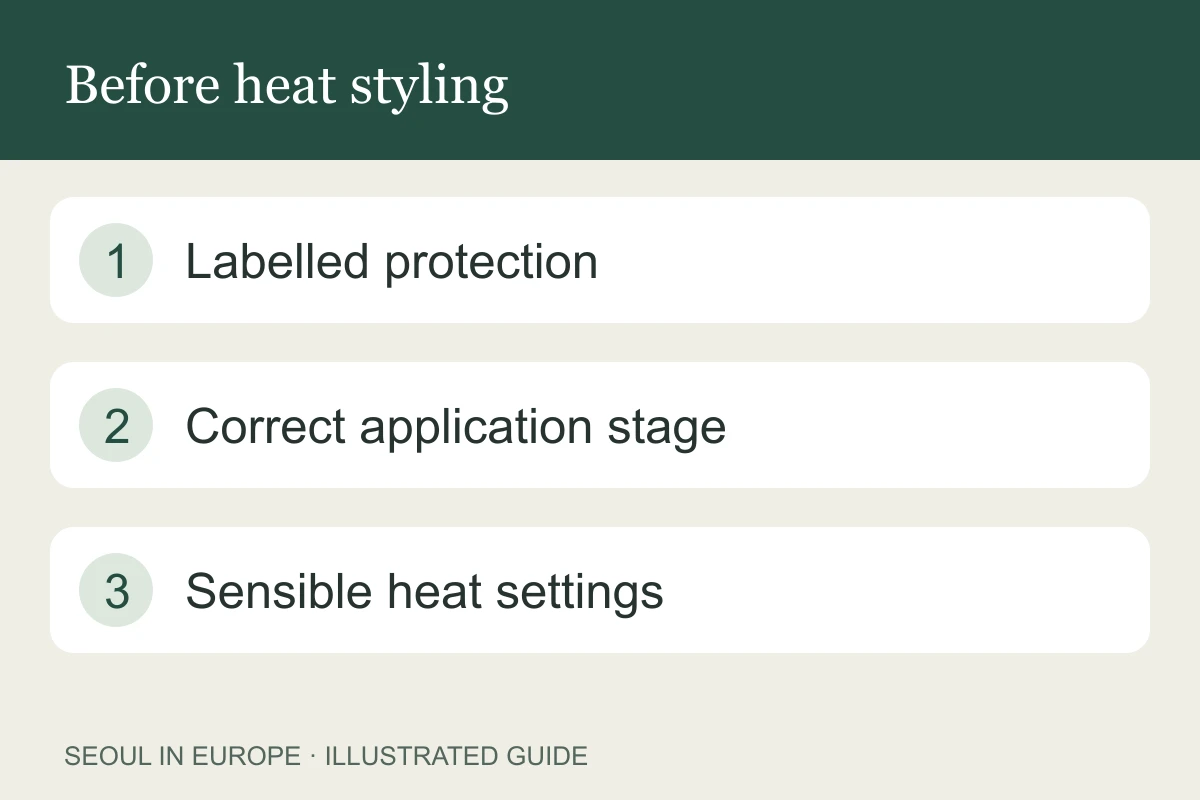
The American Academy of Dermatology's leave-in guidance says that when a product has a heat-protection function, this is indicated on its packaging. It does not give every leave-in or plant oil that function by default.
Our hair essence, serum and oil guide explains the overlapping format names. For heat styling, go one step further and identify the protection claim and application stage on the particular bottle.
What a high-temperature claim actually describes
Mise en scène advertises heat protection for Perfect Styling Serum using a hair-tress test at 230°C. That is a manufacturer claim under stated test conditions. It is not advice to set your own tool to that temperature, and it does not establish identical protection from every serum in the range.
A test temperature and a suitable styling temperature for your hair answer different questions. I would not turn a large number on a bottle into permission to add more heat or make repeated passes through the same section.
The AAD's healthy-hair guidance still recommends limiting heat styling and using low or medium settings. The protection product belongs alongside sensible handling, rather than replacing it.
Do not invent the application stage
A product intended for damp hair and blow drying is not automatically directed for spraying onto dry hair immediately before a hot iron. Read the instructions for your particular tool-and-product combination. Do not infer a method from a similar-looking bottle or a different product in the same brand.
For a combination product, decide whether it already gives you the finish you wanted. Adding another oil afterwards may be enjoyable, but it is optional. There is no reason to add an extra layer solely because one bottle says “protection” and the other says “serum”.
If the routine feels heavy, check the directed quantity and where you are applying it. Judge the finish of the first product before deciding to add another.
The purchase I would make
For someone using heat tools regularly, I would choose a product with clear instructions for that use and an application stage they can remember. If one suitable product also leaves the lengths comfortable and polished, I would stop there.
For shine alone, I would choose a finishing product without borrowing a heat-protection claim it does not make. The useful routine is easy to describe before the tool switches on: this product, at this stage, used as directed, with the heat itself kept sensible.