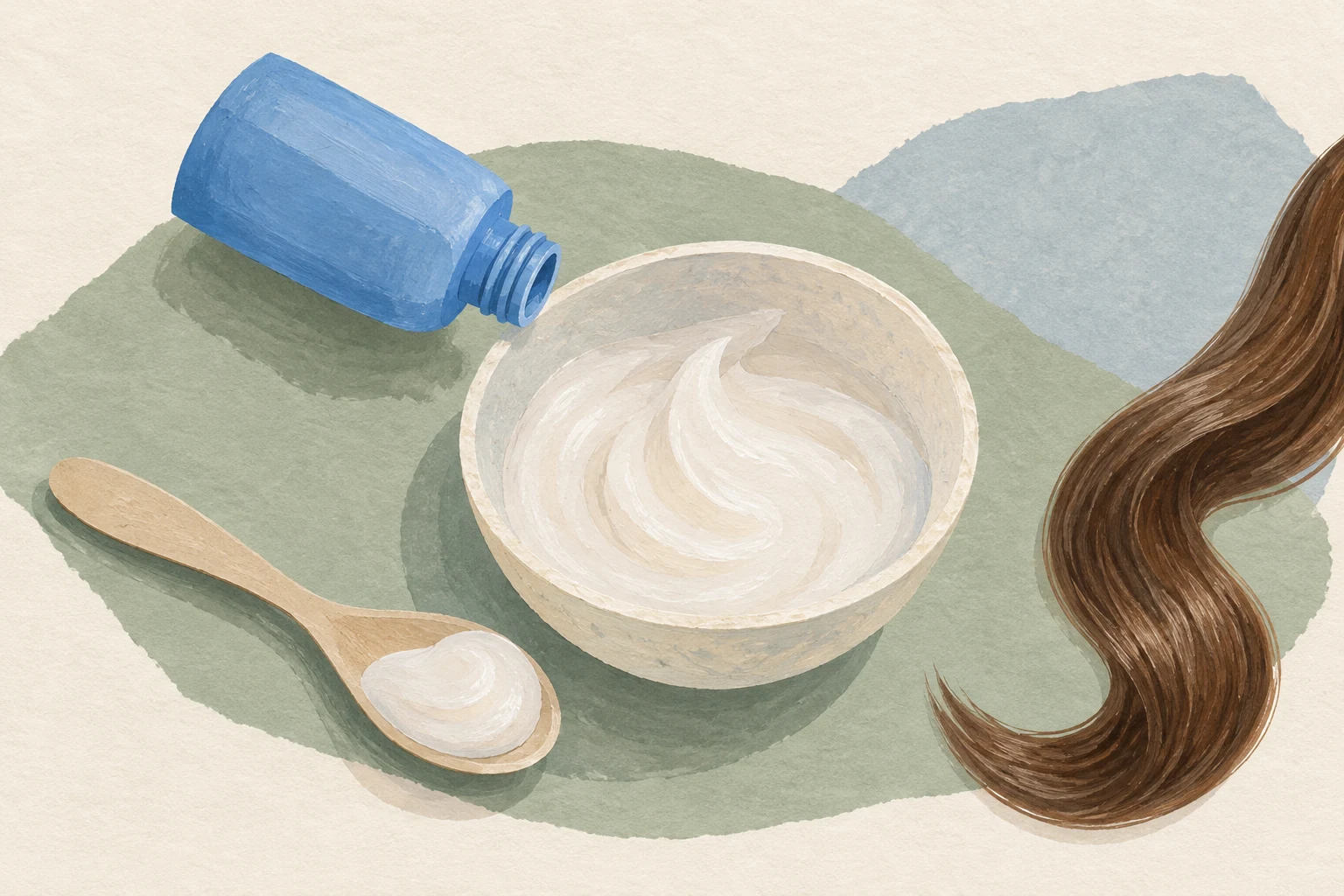
LADOR Perfect Hair Fill-Up is a rinse-out hair treatment that turns creamy when it meets water. For the 150ml version covered here, you can apply it directly to wet hair or mix it with an equal amount of cold water for a longer treatment.
LADOR is a Korean haircare brand with shampoos, conditioners and styling products. Fill-Up belongs to its damaged-hair care range. Here, “ampoule” describes a liquid treatment format; this one is rinsed out after use.
How to use LADOR Perfect Hair Fill-Up
Choose the route that fits your wash day. Both methods below follow the directions for the 150ml bottle.
| Method | What to do |
|---|---|
| Apply directly to wet hair | After shampooing, apply the liquid to wet hair. Massage as it becomes creamy, then rinse thoroughly with lukewarm water. There is no separate bowl-mixing step. |
| Mix with cold water first | Mix equal amounts of Fill-Up and cold water in a bowl until creamy: a 1:1 ratio. After shampooing, towel-dry your hair and apply the cream. Leave it for 15–20 minutes, then rinse thoroughly with lukewarm water. |
If you are curious about the product but dislike measuring and mixing, I would start with the direct wet-hair route. The bowl method makes more sense when you enjoy taking time over the lengths. Buying the bottle does not obligate you to become a part-time bathroom chemist.
I would consider this format for hair that feels rough and tangles after colouring, bleaching or frequent heat styling. If your usual conditioner already leaves your hair easy to comb and comfortable to touch, the mixing ceremony offers little reason to switch.
Why the cream transformation is interesting
The visible change makes the format easy to understand: a runny liquid becomes something you can distribute like a conditioner. Water is part of preparing the texture, rather than a contaminant that automatically weakens the treatment. For the bowl method, use the specified equal amounts instead of assuming less water must mean better care.
What interests me is the separation of preparation from application. You can make the cream first, then work it through sections instead of managing a thin liquid and wet hair at once. That could suit someone who likes taking time over the lengths. It has much less appeal when you want to wash, rinse and leave.
The satisfying transformation is not a test of hair repair. A cream forming in a bowl tells you something about the formula’s behaviour with water; it cannot tell you how much stronger your hair will become. I would judge the treatment by whether it improves everyday handling, rather than by how dramatic the mixing looks.
Protein is only part of the conditioning story
Hair treatments often put “protein” on the front of the bottle, but several ingredient groups work together. The current Fill-Up list includes cetrimonium chloride, a conditioning ingredient used to reduce static and help hair feel more manageable. It also includes a silicone derivative, PEG-12 dimethicone, alongside hydrolysed proteins such as keratin, silk and soy protein.
Hydrolysed means the proteins have been broken into smaller fragments. In haircare, these can contribute temporary conditioning, depending on the formulation and the fragments involved. They do not turn a damaged strand into newly grown hair. A review of hair-conditioning science explains how conditioning agents reduce static, coat or interact with hair fibres and improve their handling, with protein conditioning needing renewal as hair is washed.
That is a useful benefit in its own right. Hair that is easier to detangle can make wash day less of a struggle. Still, the ingredient list is a reason to understand the product as a conditioner-style treatment, not evidence that this particular bottle outperforms every ready-made mask.
Where this fits in Korean home haircare
Fill-Up is used in Korean home haircare, where the water-to-cream format gives an ordinary rinse-out treatment a small ritual of its own. LADOR’s salon-style presentation brings some of that professional-care atmosphere into a bathroom routine.
The appeal makes sense within a haircare routine focused on the condition of coloured or permed lengths. A treatment feels more worthwhile when roughness and tangling are problems you notice after washing. The cream preparation also turns ordinary conditioning into a small home-care ritual. I can see the charm of that, provided the ritual is something you enjoy rather than another appointment to keep.
This is care for the hair lengths, rather than a scalp tonic. A dry-feeling end and an uncomfortable scalp are different questions, even when both appear under “haircare” in a shop menu.
For an everyday conditioner versus an occasional treatment, our hair mask vs conditioner guide explains how those steps fit together.
When I would make room for it
For rough, chemically treated lengths, I would shortlist Fill-Up as a rinse-out conditioning option. Start with the application route that fits your routine, and pay attention to detangling, softness after drying and whether the finish suits you. Those are more useful questions than whether an ampoule sounds more professional than a conditioner.
For fine hair that is already easy to manage, I would keep the simpler conditioner you like. I would also favour a ready-made mask if you want a leisurely treatment but the measuring and bowl are the parts you find annoying. The extra preparation earns its place through your preference for the format, not through an established guarantee of superior results.
With the special-care route, prepare the portion you intend to use rather than a batch for later. The directions describe mixing and applying the treatment, not keeping diluted cream in another bottle. Keep it as a hair-length treatment, rinse as directed and stop if it irritates. A fragrance-containing treatment need not become a scalp experiment.
My take is that Fill-Up is a credible conditioning format with a particularly satisfying bit of theatre. I would choose it for the combination of a relevant hair concern and a routine I could enjoy maintaining. For everyone else, a conditioner that works without a bowl remains a very good piece of bathroom technology.