Numbuzin No.3 Skin Softening Serum is worth considering when a very watery toner leaves you wanting a more substantial moisturising layer. Ferments get the headline, but glycerin, squalane and panthenol help explain its appeal for dry-feeling, rough-looking skin.
The ‘No.3’ on the bottle identifies the product family, so remember the serum part too. It is a different step from a No.3 toner. For this one, the useful aim is a softer, more comfortable surface; poreless skin is an advertising idea, not a realistic destination.
What is behind the number?
Numbuzin is a Korean skincare brand that groups products into numbered lines. No.3 is associated with skin texture and pores; the number is a product-family label, not a strength rating. Our Numbuzin numbers guide explains the wider system.
Bifida Ferment Lysate and Galactomyces Ferment Filtrate lead the ingredient list. They are fermented materials used to condition the skin. The practical aim is a more comfortable, smoother-looking surface, supported here by ingredients such as glycerin, squalane, niacinamide and panthenol. Fermentation does not make those ordinary moisturising ingredients less important.
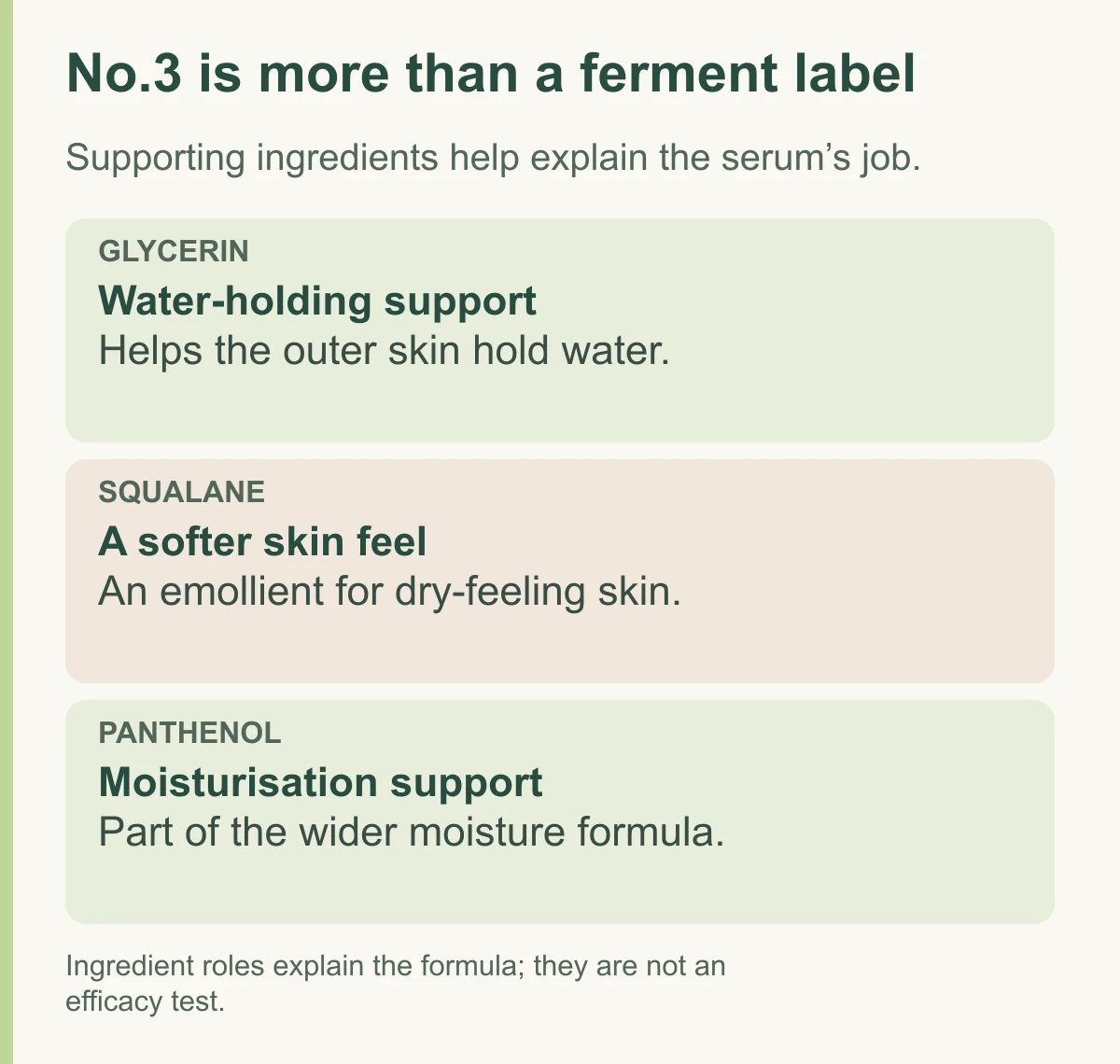
The names describe different jobs. Niacinamide, a form of vitamin B3, is used for uneven tone, moisture-barrier support and sometimes excess surface oil. Glycerin attracts water to the outer skin, while squalane is an oil-like emollient that softens dry-feeling skin. Panthenol adds moisture support. Fermented ingredients are part of the serum's conditioning story, but the word ‘fermented’ does not by itself prove brighter or smoother skin. That is why I would read No.3 as a multi-ingredient formula, not a single fermentation claim.
The list also includes silk and goat milk extracts. Fermentation does not automatically make a product vegan or entirely plant-based.
Fermented does not mean live probiotics
“Lysate” means material produced by breaking down cells or microorganisms; “filtrate” refers to filtered material. COSMILE Europe's explanation of Bifida Ferment Lysate is much less mysterious than probiotic skincare advertising can make it sound.
These ingredient names do not establish that a bottle contains living beneficial bacteria, or that it will reset your skin's microbiome. They describe materials used in a cosmetic formula. Likewise, a high percentage of a ferment raw material is not a measurement of how much of every potentially useful compound reaches your skin.
I find the ordinary formulation story more persuasive than imagining a small yoghurt culture moving into my bathroom cabinet.
The texture story is worth reading
The interesting part of the development story is the texture: Numbuzin wanted something between ferment skincare that felt heavy and watery products that felt unsatisfying. In a brand-manager interview, the company described spending roughly a year working through samples to reach that middle ground.
That texture brief is the part I find convincing. No.3 is aimed at the space between a watery splash and another heavy layer. If that is what your routine is missing, it gives you a reason to consider the serum beyond the ferment percentage.
For pores, I would keep the goal realistic: a moisturised surface can look smoother, but the serum is not a way to permanently shrink pores. The more useful test is whether it improves the comfort and surface appearance that prompted you to add it.
Where I would put it in a routine
Treat No.3 as an optional serum step before moisturiser. If you already use several hydrating liquids, adding it may simply repeat a job. If a watery toner leaves you wanting a more substantial liquid layer, the formulation brief makes it a more interesting candidate.
Introduce it on its own rather than changing several products at once. Previous trouble with a ferment product does not identify which ingredient caused it, but it is a reason to test cautiously rather than assume every fermented formula will suit you.
These are affiliate links. I may earn a commission if you buy through them, at no extra cost to you.
You can browse Numbuzin’s range at Olive Young Global. This is a brand selection, not a verified listing for the exact No.3 serum discussed here.
I would shortlist No.3 for a moisturising serum with some substance, especially when a thin hydration layer feels unsatisfying. Fermentation makes it recognisable; the texture brief and supporting moisturisers make it useful to consider.