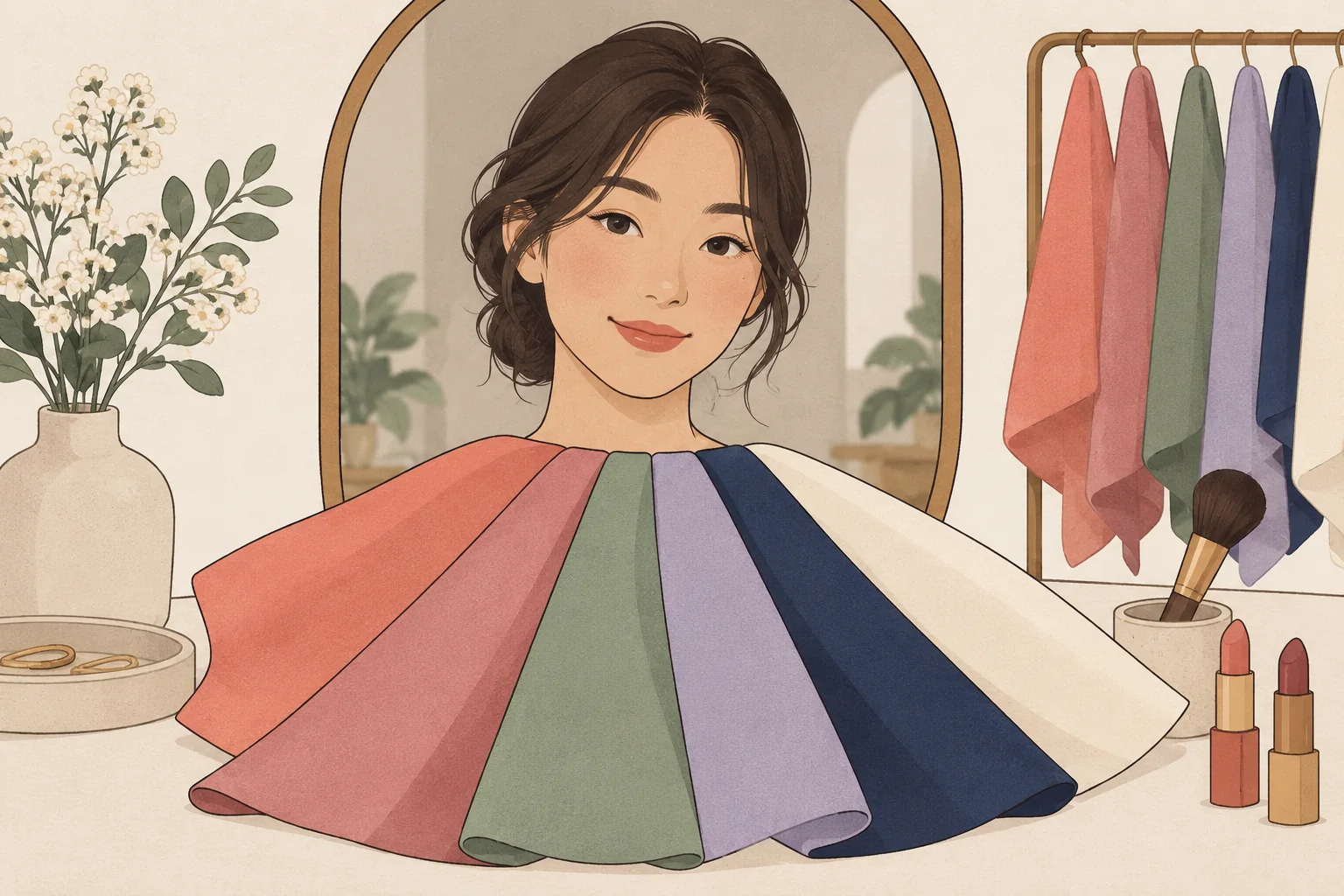
Korean personal colour analysis compares how different colours look beside your face and uses those comparisons to guide makeup and styling choices. It often involves comparing coloured fabrics near your face, then applying the findings to makeup, hair or clothing.
Warm or cool is only part of the explanation. A light pink and a deep berry can both be described as cool, yet give a very different makeup result. How light or dark a colour is, and whether it looks vivid or muted, also help you decide what to try.
The best thing to bring home from a consultation is an explanation you can use in a shop. A seasonal label on its own gives you much less to work with.
Over the past couple of years, I have continued to hear about personal colour consultations around me in Korea, including as an activity for overseas visitors. The appeal goes beyond makeup: understanding a colour direction can make choosing clothes less confusing too.
I also know people who would rather not have a consultation because they worry it will make them feel they should stop wearing their favourite colours. If you share that concern, ask the consultant how to wear the colours you already love. I think the advice is most useful when it helps you enjoy more of your wardrobe, rather than feel restricted by a palette.
What warm, cool, light and muted mean
Personal colour language separates several properties that tend to get bundled together as a single "tone".
Warm and cool describe colour temperature. In makeup, this can help you compare an orange-leaning red with a blue-leaning red, rather than treating both as the same red lipstick.
Light and dark describe depth. A pale wash of pink and a deep rose can create different levels of contrast, even before you consider warmth.
Clear and muted describe how vivid or softened a colour appears. A crisp pink can look quite different from a dusty, greyed pink at a similar depth.
Those distinctions appear in the framework described by Find Your Colour, a consultancy using a Korean approach. Different providers organise their categories differently, so the number of seasonal subtypes is less useful than understanding the differences they show you.
For makeup shopping, ask which change matters most. Do you prefer the cooler version, the less vivid version or simply a lighter application? That gives you a practical direction beyond memorising a long list of products for your season.
Why the Korean terms can make shopping confusing
Korean beauty discussions often shorten a seasonal description into a compact label, then add words such as light, deep, bright or mute. Those are useful shortcuts when people already share the vocabulary. They can look like a set of strict rules when you are seeing them for the first time.
For example, a recommendation for a muted colour is not necessarily telling you to buy something pale. Mutedness and depth are different properties. Likewise, a cool-coloured blush is not guaranteed to suit every person who has received a cool-season label.
Treat that language as a way to narrow what you look at. The next step is still to see the actual colour and decide how you would wear it. The shade name, a seasonal recommendation and a photograph on someone else each give you part of the picture.
Foundation matching is a different question
Finding a foundation that blends into your skin is not the same task as choosing the effect of a lipstick or jumper. Foundation needs the right depth and undertone for the area you want it to match. Colour styling asks what happens when you place a different colour beside your face.
That is why a seasonal label cannot give you a universal foundation shade number. Bring a base product that matches you reasonably well if your consultant reviews makeup, and explain what you like or dislike about the result.
An optional skin-analysis service is another separate offering. A colour consultation does not, by itself, tell you whether your skin needs more moisture or whether a skincare ingredient will suit you. Choose the service for the question you actually want answered.
What happens in a consultation?
The details vary by provider and package. As one current example, BRANME's White programme includes personal colour and undertone analysis, makeup and hair-colour recommendations, and a review of makeup you normally carry. Its other programmes add different services.
That tells you what to ask before booking: will you compare colours in person, try recommended makeup, review your current products and receive something you can refer to afterwards? If you want help choosing lipstick, a session that only ends with a clothing palette may leave your main question unanswered.
Ask whether the recommendations can be explained in your preferred language, and check what is included for your group size. A shared appointment can be fun, but each person still needs enough time to understand their own comparisons.
Ask these questions before leaving
The most useful questions are specific:
- Which matters more for me in these examples: warmth, depth or how muted the colour is?
- Can you show me two lip colours that explain that difference?
- Which of my existing products would you keep, and how would you apply them?
- How can I wear a colour I like that sits outside your first recommendation?
- Can I take home the colour notes and exact product names we tried?
The point of asking is to understand a recommendation well enough to use it later. You should not have to book another consultation simply because a recommended lipstick has been discontinued.
Is it worth paying for?
A consultation is most appealing when you keep buying colours that look good in the tube but disappoint you when worn, and you want somebody to work through comparisons with you. It can also be an enjoyable beauty experience during a visit to Korea.
It is less necessary if you already know the colours you love and feel comfortable choosing them. You do not need a seasonal identity before buying makeup, and a recommendation does not make a favourite lipstick wrong.
My advice is to judge the service by what it helps you understand. Useful comparisons, application ideas and a few better choices from makeup you already own are a more convincing result than a label followed by a long replacement shopping list.