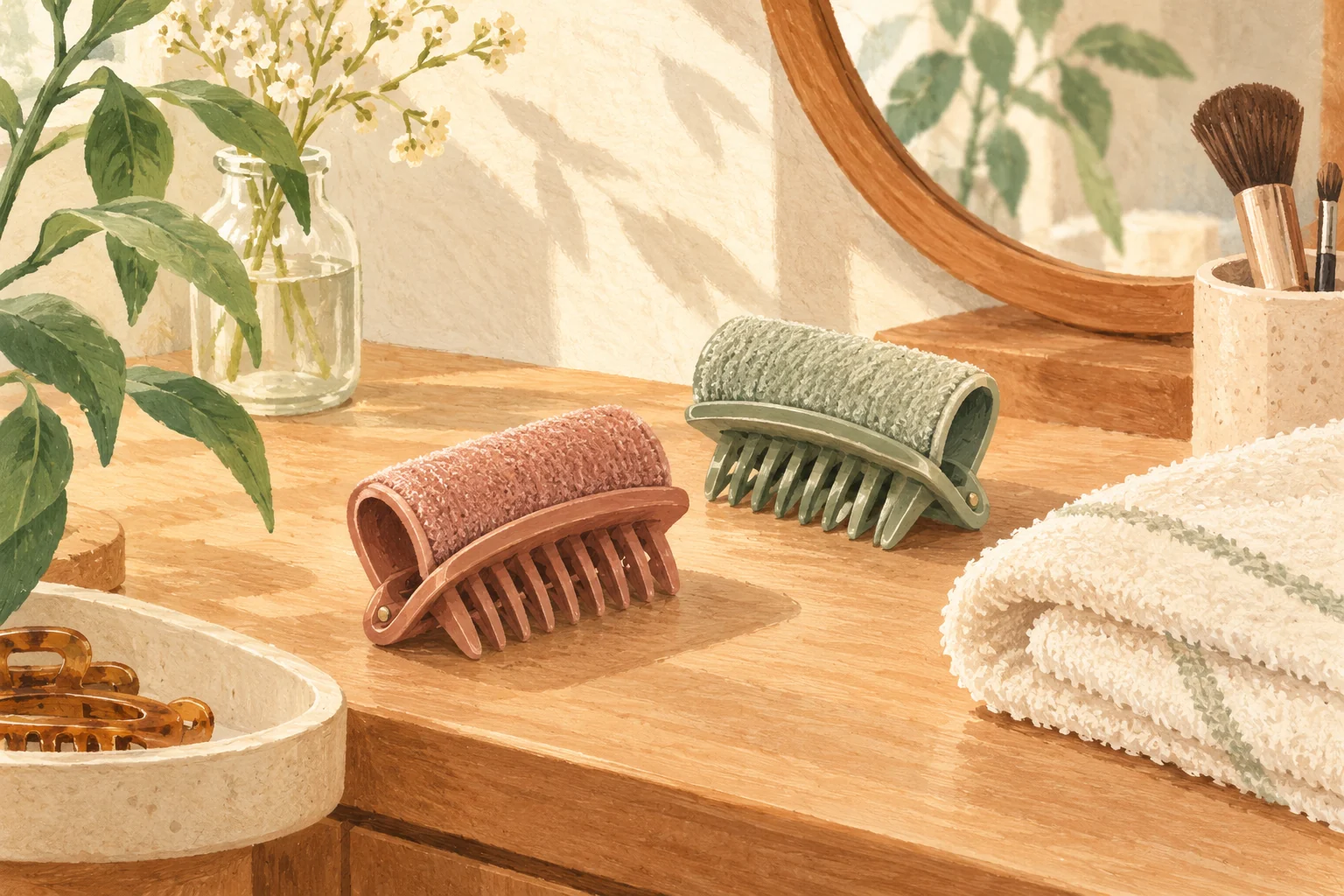
Root volume clips are small styling tools used to hold a section of hair lifted near the roots. The aim is temporary shape around the crown or parting. They do not create new hair or increase hair density, and they do a different job from rolling the ends of a fringe around a large roller.
If the top of your hair looks flat but you do not want another powered device, a suitable clip can be a simple tool to try. Its usefulness depends on the design, placement and whether the result lasts long enough to make the step worthwhile for you.
Look at the shape before copying the technique
The name root volume clip covers more than one design. Some look like a small roller held between a clamp; others lift a section with a different arrangement. They do not all open, grip or tolerate heat in the same way.
Use the instructions for the tool you have. For example, Kitsch's volumising clips are presented as a heat-free option, with directions to lift sections of dry or slightly damp hair and leave them for 10–15 minutes. That is a method for those clips, not a timing rule for every roller clamp.
A demonstration using a heat-compatible roller clip is not permission to point a hot dryer at any plastic clip in the bathroom. Nor does a brand's direction for a vented volume brush automatically apply to a closed clamp.
This is one reason to buy for a clear job. If the aim is lifting the crown, look for a tool designed to hold that section. If you want a rounded bend through the fringe, a fringe roller may be the more direct option.
Placement matters more than adding lots of clips
Work with a manageable section near the area you want to lift. A very large section may be awkward to hold; a clip placed tightly against the scalp can be uncomfortable. The goal is support for the shape, not tension on the roots.
Open the tool properly when removing it and release the hair gently. Pulling a closed clip through the section can undo the styling and catch strands at the same time. If hair keeps snagging, stop and consider whether the tool design or section size is suitable.
The practical appeal is being able to hold a section while you finish another part of getting ready. That convenience only helps if putting the clip in and taking it out is straightforward for your hair.
What if the style needs a dryer?
Some tool directions include heat styling. If yours does, follow its heat-compatibility and use instructions, and keep the dryer and hot surfaces away from the scalp. Use the appropriate precautions for heat styling rather than heating a clip until it feels uncomfortable.
The AAD's general haircare advice recommends limiting excessive heat and using gentler dryer settings. A small styling accessory is not a reason to forget that advice.
There is no universal number of minutes that makes every clip work. Hair length, the section, product already on the roots and the tool design all change the process. Judge the method on the actual result rather than extending the time indefinitely when it is not doing what you want.
The result is styling, not extra hair
Lifting a section can make the top look less flat. It does not explain why someone is losing hair, and it does not treat thinning. A cosmetic change in shape and a change in hair growth are separate things.
The temporary nature also matters when deciding whether the effort is worthwhile. A little lift for leaving the house may be enough. If you expect an unchanged salon-style shape after a long day, a clip alone may not match that expectation.
If the style collapses immediately, look at what is weighing the section down and how the tool is being used. Do not respond by clamping more tightly or adding heat beyond its directions. Another styling method may simply fit your hair better.
Would I add one to the routine?
I would consider it for a specific flat area and keep the first attempt simple: one appropriate tool, a small section and the manufacturer's method. Check the shape after removal and again after ordinary wear.
If the lift is useful and the extra step fits into getting ready, it can earn a place beside the hairbrush. If it catches, leaves a shape you dislike or demands too much fuss for a brief result, it is reasonable to skip it. The advantage is having a modest styling option, not another accessory you have to use every morning.