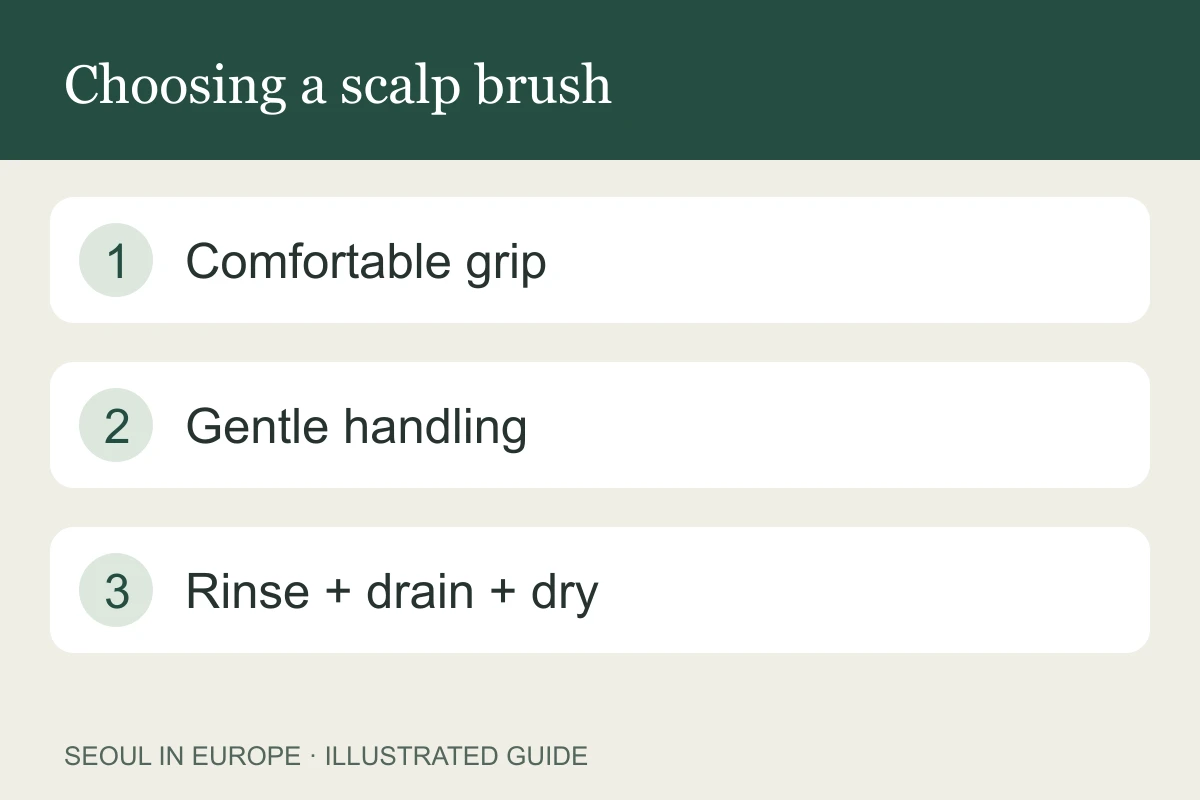
A scalp brush can be a pleasant washing tool, but it is optional. The useful reasons to keep one are a comfortable grip, easy access to the scalp and a design you can rinse and dry without much effort. A satisfying massage is not evidence that the brush treats hair loss or changes how fast hair grows.
Friends who use silicone scalp brushes have described them to me as refreshing and easy to leave to dry after washing. That makes the appeal understandable: a pleasant shower step that feels easy to maintain. I would look for a shape that supports that convenience. If fingertips already do the job comfortably, the brush can remain a preference.
Shampoo the scalp, not a bundle of hair
The American Academy of Dermatology recommends directing shampoo to the scalp rather than washing the full lengths as though they were the same surface. That is a useful starting point with or without a brush.
Think about the job your hand is doing. With a lot of hair, getting shampoo to the scalp can be awkward. A tool might make that easier to organise, or it might add something else to manoeuvre through wet lengths. The answer depends on how comfortably it works in your own washing routine.
Korean brand AROMATICA sells a product specifically called a Dual Scalp Care Shampoo Brush. That is a washing tool, distinct from a leave-on scalp tonic or a brush intended to detangle the lengths. Similar-looking tools do not automatically have the same purpose.
Judge the pressure before the sensation
More pressure should not be the goal. If a tool catches the hair or makes the scalp sore, the useful response is to stop and reconsider the grip, tool and instructions, rather than assume the uncomfortable feeling proves it is working.
For long hair, I would look for a method that lets the tool reach the scalp without dragging through the lengths. A scalp massage and detangling are separate jobs. Follow the tool's stated technique rather than copying an enthusiastic scrubbing demonstration.
Nor would I buy it to scrape away every visible flake. Persistent itching, soreness or a troublesome scalp condition needs appropriate advice. A cosmetic tool cannot tell you what is causing it, and a stronger washing sensation does not answer that question.
The cleaning job comes with the tool
Before buying, look at how easily shampoo and hair can be rinsed out. Can you reach the spaces that collect residue? Can water drain, and can the tool dry between uses? A brush with reachable gaps and a place to drain is easier to fit into a washing routine than one that traps residue out of sight.
That extra handling is part of the purchase. Compare it with the actual inconvenience you want to solve, rather than with a promise of a more elaborate scalp routine. A simpler shape and a grip you can hold with wet hands may matter more than adding another row of massage points.
When I would try one
I would consider a scalp brush if reaching the scalp or using my fingertips comfortably were the problem, and the tool's instructions offered a manageable alternative. I would skip it if hand washing already did the job or if it encouraged more pressure than my scalp tolerated.
Our scalp tonic and shampoo guide explains the separate product steps. The brush can assist a washing habit; it does not turn that habit into a treatment.