Skin flooding has a dramatic name for a fairly simple idea: apply a hydrating layer to slightly damp skin, then finish with moisturiser. The useful part is the sequence. A toner, essence and three serums aren't an admission requirement.
I like the reminder to pay attention to hydration. I'm less convinced by turning every version of the method into a list of products to buy.
A trend name doesn't establish an origin
Vogue Korea covered skin flooding in January 2023, describing a TikTok trend built around layering hydration. That's a useful connection to the Korean beauty conversation; it doesn't establish who invented the method or that everyone in Korea follows it.
Hyaluronic acid is used because it binds water, helping the outer skin look and feel less dehydrated. It is a humectant, not an exfoliating acid. Glycerin also holds water, while panthenol supports moisturisation. Think of the serum as a water-holding layer and the moisturiser above it as help keeping that water from escaping: useful partners, with different jobs.
The appeal is easy to understand. A routine organised around moisture sounds more inviting than another aggressive reset. But a social-media name doesn't turn an ordinary sequence into a separately proven treatment.
What a simple version looks like
Dr Maryam Zamani's clinic’s glossary describes gentle cleansing, damp skin, a hydrating serum and moisturiser. The American Academy of Dermatology also recommends applying moisturiser while skin is still damp in its general dry-skin advice.
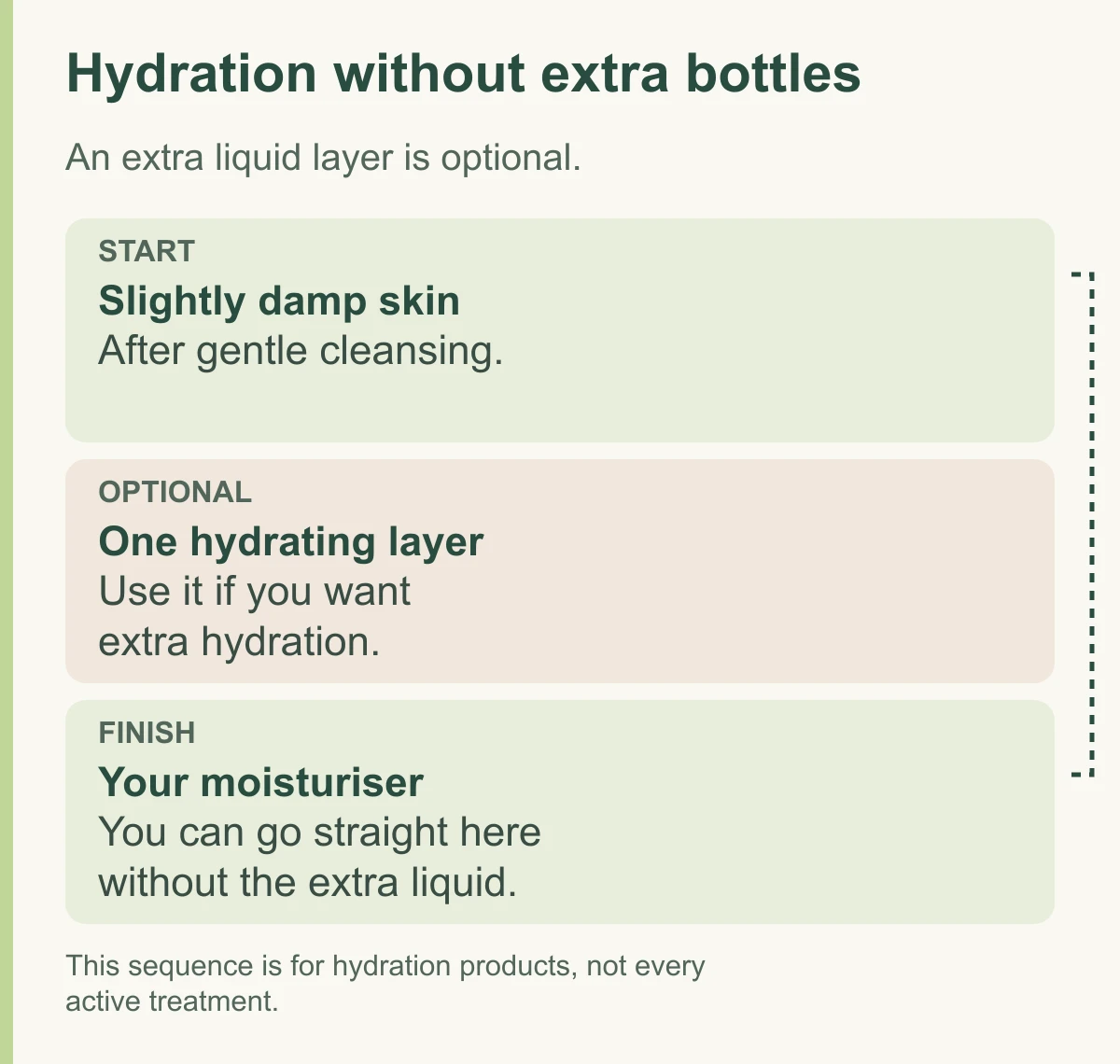
For a simple cosmetic routine, that can look like this:
- Cleanse gently, then pat your face so it is slightly damp rather than dripping.
- If you want an extra hydrating layer, apply one toner, essence or serum you already tolerate.
- Follow with your usual moisturiser.
This sequence is for hydration products, not an instruction to put exfoliating acids, retinoids or prescribed treatments on wet skin. Follow the directions for those products separately.
Give each bottle a job
A toner and a serum can both be sold around hydration. Adding the second makes more sense when it offers something you actually want, rather than filling a missing category on a diagram.
Torriden is one option I would shortlist if I wanted an extra light hydration layer. Its DIVE IN serum uses hyaluronic-acid ingredients to help the outer skin hold water. I would put it before moisturiser, choosing that one serum rather than a toner–essence–serum sequence for the sake of the trend.
If you are choosing the hydrating layer itself, our Torriden-versus-COSRX Snail comparison looks at the jobs and formats behind those two options.
This is an affiliate link. If you buy through it, I may earn a commission at no extra cost to you.
The existing Olive Young link for Torriden Dive-In Serum currently opens the upgraded 50ml serum set with 10 Multi Pad sheets. The set's extras aren't additional steps you need to complete the method.
Keep the part that earns its place
If several layers feel sticky or disrupt how your moisturiser and makeup sit, simplify the combination. A glossy finish immediately after application isn't the same thing as a routine that stays comfortable through the day.
I'd judge skin flooding by that comfort, not by how many watery layers fit into the evening. Keep the hydrating step you enjoy, finish with moisturiser, and stop there if that is enough. The method should make a routine easier to live with, not harder to finish.