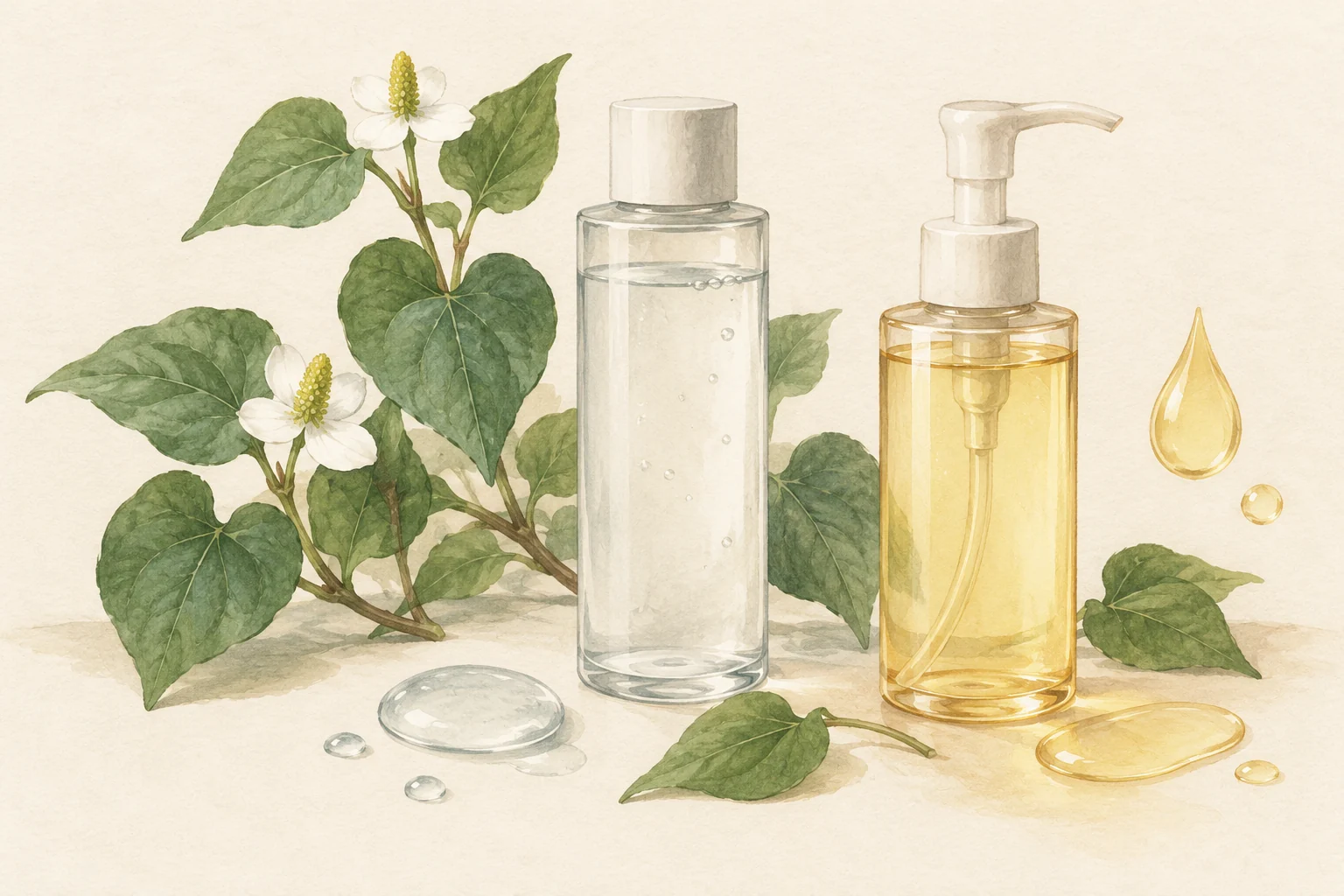
Heartleaf is a plant ingredient used in Korean skincare for soothing care. In a toner, it usually comes with a light, hydrating formula that you leave on the skin. In a cleansing oil, it's part of a product you massage in and rinse away. The same plant name doesn't make those two bottles interchangeable.
I've seen heartleaf on plenty of skincare products in Korea, but recognising the name isn't the same as knowing what it does. The useful distinction is between adding a light layer of hydration and taking off makeup or sunscreen. You don't need to buy a matching range to do either.
What is heartleaf?
The botanical name is Houttuynia cordata. You'll see that name in ingredient lists, sometimes as an extract and sometimes as flower, leaf and stem water. “Heartleaf” is the easier name to remember, taken from the shape of the leaves.
Anua, a Korean skincare brand, is one example of how the ingredient appears across a range: its products include the Heartleaf 77 Soothing Toner and Heartleaf Pore Control Cleansing Oil. The ingredient gives the range a recognisable theme, but the toner and cleanser still need to be judged by what their formulas are meant to do.
That's where the word “soothing” needs a little translation. In an everyday routine, the useful result is skin that feels less uncomfortable, alongside hydration that doesn't feel too heavy. It doesn't mean a plant extract can stand in for treatment when the actual problem is persistent acne or a skin condition.
Why is it used for soothing skincare?
Heartleaf has attracted interest for its plant compounds and possible skin benefits, including hydration and oil control. There is some human research as well as laboratory work. A small study of a heartleaf-containing toner reported improvements in measured hydration and sebum levels.
Those are promising early findings. For a daily routine, hydration and comfort are more realistic aims than treating heartleaf as a replacement for acne medication.
It also helps to separate oiliness from dryness. You can dislike a greasy surface and still want hydration. A light toner can be appealing for exactly that combination: adding a water-based layer without choosing a richer cream texture. Whether that extra layer is useful depends on the rest of your routine.
The other ingredients are doing useful work too
Take Anua's Heartleaf 77 Soothing Toner as a concrete example. Alongside its heartleaf base, the current ingredient list includes glycerin, betaine, panthenol and forms of hyaluronic acid. It also contains centella asiatica extract, the plant often called cica.
Glycerin and hyaluronic acid are humectants: ingredients that attract and hold water in the skin. They're a straightforward reason for a light toner to provide hydration. A formula doesn't need all of its useful work to come from the ingredient printed largest on the front.
That cica inclusion is worth noticing, too. Heartleaf and centella aren't opposing teams. You don't have to decide that one plant is exclusively for oily skin and the other exclusively for dry skin when a single formula can contain both. If you're curious about cica terminology, our centella and madecassoside guide explains the difference between the plant extract and a specific compound.
The 77 in the toner name refers to its heartleaf base, not a strength rating for acne treatment. A plant water or extract is itself a mixture. It isn't the same thing as a bottle containing 77% of one isolated active ingredient, and the number doesn't tell you how much hydration your skin will feel.
Where a heartleaf toner fits
Use a leave-on toner after cleansing, before heavier products. You can pat it on with clean hands; a cotton pad is another option. For a simple hydration step, I prefer the hands-on approach because it doesn't require another item or turn applying a watery toner into a long rubbing session.
Start with a small amount and let the feel guide the next step. If the skin is comfortable, you don't need several more layers just because the bottle is large. If it still feels dry afterwards, a moisturiser may be the more useful addition. Humectants help with water, while the richer ingredients in a cream can help reduce moisture loss.
That's the distinction behind our glycerin and hyaluronic acid guide, too. More watery products aren't automatically the answer to skin that needs a longer-lasting moisturising layer.
If a toner stings or leaves the skin more uncomfortable, don't interpret that as evidence that a soothing ingredient is “working”. A pleasant botanical identity doesn't guarantee that every person will like the complete formula.
A heartleaf cleansing oil has a different job
The oil cleanser is for taking off makeup, sunscreen and other oily residue. Apply the original Anua Heartleaf Pore Control Cleansing Oil to a dry face, massage gently, add water to emulsify it, then rinse. Its directions include following with a water-based cleanser.
The important choice here is whether you like using an oil cleanser and how it rinses, rather than how much it resembles a toner from the same range. Our cleansing oil versus balm guide compares the practical difference between those formats.
One formula detail is especially useful if you avoid fragrance: the original Heartleaf Pore Control Cleansing Oil lists it, while the named toner is presented as fragrance-free. Matching branding doesn't mean matching ingredients. Other versions need to be checked as their own products.
I wouldn't choose the oil specifically to get a leave-on soothing step. It is being washed away, and the removal job should justify the purchase. Equally, a toner isn't a way to clean off sunscreen at the end of the day.
Which would I choose?
For light, soothing hydration, I'd choose the leave-on toner, especially if a watery texture appeals to you. If the problem is makeup and sunscreen that need removing, choose a suitable cleanser; the oil earns its place by cleaning well.
Heartleaf can be a useful ingredient to recognise, but it isn't a reason to buy an entire routine. Pick the step you're actually missing, and leave the matching bottles on the shelf.