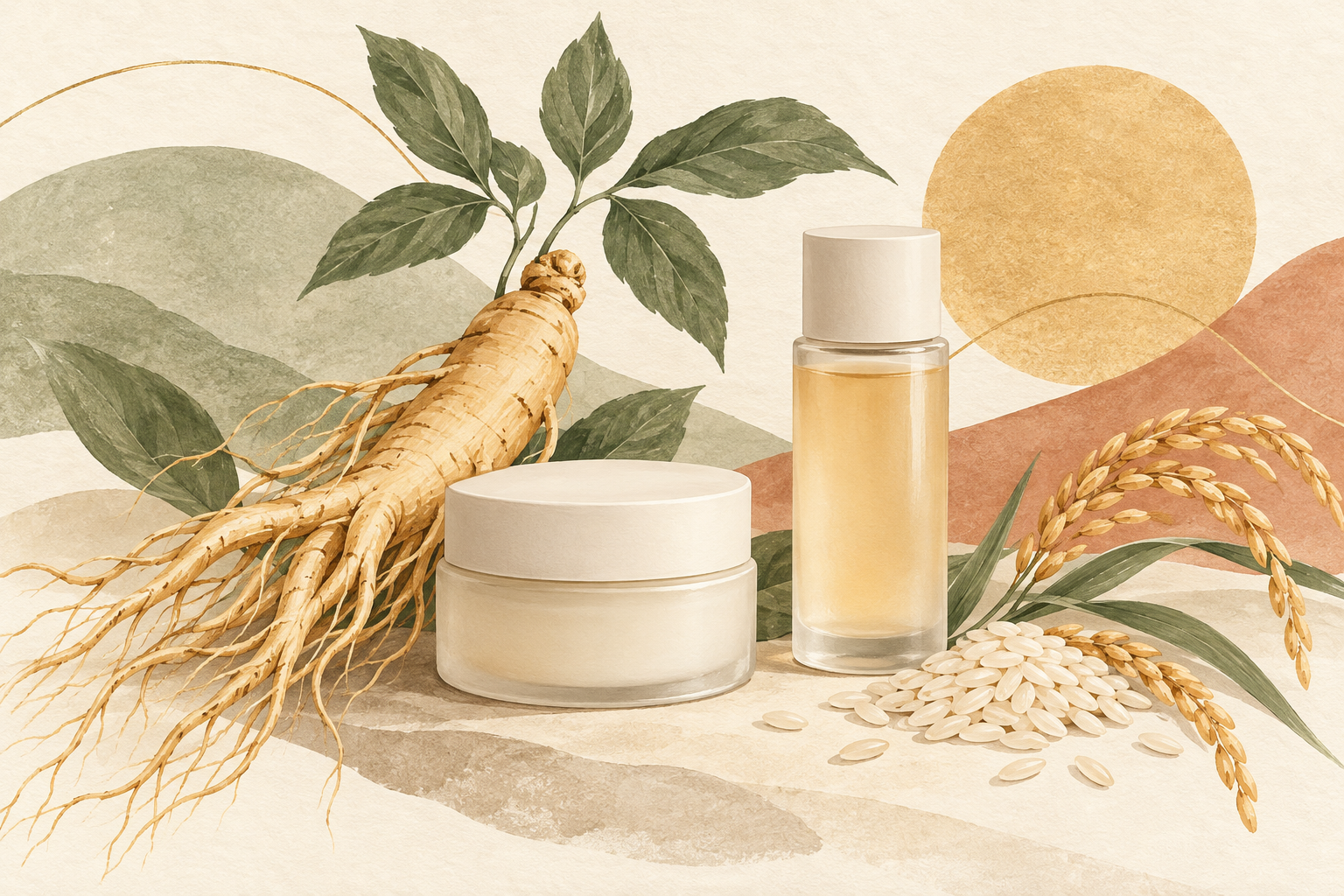
Hanbang refers to traditional Korean medicine. In skincare, it usually describes modern cosmetics inspired by that tradition, particularly its botanical ingredients. Think ginseng, rice and herbal blends in an essence or cream, rather than a different kind of skincare routine you need to learn.
In Korea, plants such as ginseng have long been valued as ingredients for health, and that tradition is still alive in herbal medicines, teas and foods today. Ginseng tea and red-ginseng products are familiar examples. In skincare, these ingredients take on more specific jobs. Let's look at ginseng, rice, mugwort, green tea and licorice, what they are used for, and which skin concerns make each one worth exploring.
A Korean beauty tradition, not a new serum step
For someone discovering K-beauty through sunscreen and cushion foundation, hanbang can look like the next ingredient trend. Its roots are much older. It connects beauty branding with traditional Korean ideas about botanical ingredients, giving familiar plants a place in contemporary skincare.
Sulwhasoo is a Korean premium skincare brand with a particularly strong ginseng identity. Its heritage timeline traces an earlier ABC Ginseng Cream to 1966. That history helps explain why ginseng feels at home in this part of Korean beauty; it is not an ingredient that arrived with the latest social-media routine.
Beauty of Joseon takes another approach. The Korean brand describes its products as hanbang-inspired skincare, combining traditional ingredients with modern ones in everyday products. You can encounter the idea in a simple watery essence as well as in a premium cream. An elaborate jar is not part of the definition.
I like that range. It makes Korean beauty more interesting than a constant search for the newest active ingredient. But heritage is the beginning of the story, not a reason to replace every product you already enjoy.
What is ginseng doing in the formula?
Ginseng is one of the most recognisable plants in hanbang-inspired beauty. Brands use different preparations, including root water, extracts and seed oil. Those names describe different ingredients; a ginseng cleansing oil and a ginseng essence are not doing the same job simply because both feature the plant.
In skincare, ginseng is commonly positioned around revitalising and age-related concerns. Sulwhasoo, for example, places ginseng at the centre of its anti-ageing range. That is useful for understanding the brand's focus, but the broad reputation of the plant cannot tell you the results of every product containing it.
Start with the product type. A cleansing oil removes makeup and residue before you rinse it away. An essence adds a light layer to a routine. A moisturising cream gives you a different texture and finishing step. The botanical name should not obscure those everyday functions.
Rice: hydration and a softer feel
Rice is familiar territory in Korean food, and it also has a place in traditional beauty stories. Beauty of Joseon draws on the older practice of using rice water in its skincare identity. In modern formulas, you will see rice extract, rice bran water and rice-derived oils. They are different preparations, so a milky rice toner and an oil-rich cream need not feel alike.
The most useful starting point is hydration. Rice bran, the outer layer of the grain, contains antioxidant compounds such as ferulic acid and gamma-oryzanol. Rice-bran ingredients have been studied in moisturising formulas that helped improve skin hydration. For someone whose skin feels tight after cleansing, the appeal of a rice-based hydration product is a softer, more comfortable feel and a dewy finish.
There is a practical example in Beauty of Joseon's Glow Replenishing Rice Milk ingredient list: rice extract and rice amino acids sit alongside glycerin, panthenol and ceramide NP. The brand positions it as a hydrating toner. I would consider this kind of product for a light moisture layer, rather than choose rice alone as my answer to stubborn dark marks.
Mugwort: the calming side of the botanical shelf
Mugwort is called ssuk in Korean. It is a familiar traditional ingredient in foods such as mugwort rice cakes, as well as in herbal-care traditions. Finding it in skincare connects a recognisable Korean plant with a very everyday concern: skin that feels uncomfortable and needs gentler care.
In cosmetics, mugwort is particularly associated with soothing products. The Korean brand I'm From has built an entire mugwort range around this idea; its brand FAQ describes the mask as a cooling, soothing step. That is the direction in which I would explore it: a calming essence or moisturising product when comfort is the priority, rather than another exfoliating step. The texture still matters, so someone wanting a light layer and someone wanting a richer cream can approach the same ingredient differently.
Green tea: antioxidants, with a reason to interest oily skin
Green tea will be familiar as a drink, but its skincare appeal comes from compounds called polyphenols, including catechins such as EGCG. These offer antioxidant activity: they help counter some of the chemical reactions involved in damage to skin cells. This is why green tea appears in products aimed at supportive everyday skin care, rather than only in products with a traditional herbal identity.
There is also research on topical green tea and facial oiliness. That makes it an ingredient worth exploring if excess shine is one of your concerns. I would favour a light green-tea formula for that job over a rich cream chosen simply because it contains herbs. Treat it as a supporting ingredient, with benefits depending on the extract and formula; it does not replace your sunscreen or turn an ordinary toner into an acne treatment.
Licorice: a traditional root with an uneven-tone role
Licorice, or gamcho in Korean, is a familiar ingredient in herbal medicine. In skincare, it is worth knowing for a different reason: some compounds from the root, including liquiritin, have been researched for helping reduce uneven pigmentation. Melanin is the pigment that gives skin its colour; these ingredients are of interest when some areas appear darker than the surrounding skin.
That is the meaning of brightening I would look for here: a more even-looking complexion, rather than changing your natural skin colour. Research on licorice-derived ingredients gives this botanical a more specific role than a vague promise of healthy skin. If uneven tone is your concern, a leave-on brightening formula is the relevant place to explore it. A licorice ingredient supporting that formula makes more sense than expecting the same benefit from any cleanser with herbs on its label.
The familiar ingredients still matter
Beauty of Joseon's Ginseng Essence Water ingredient list contains ginseng ingredients alongside glycerin and niacinamide. The brand describes it as a watery, hydrating essence. That combination is a useful reminder that a traditional inspiration and modern cosmetic ingredients can share the same bottle.
Glycerin helps skin retain moisture. Niacinamide, a form of vitamin B3, can support the skin barrier that helps keep moisture in. These are practical roles to understand when considering a hydration product. The interesting plant on the front does not make the supporting ingredients irrelevant.
For a light layer beneath cream, this kind of essence has an easy place in the routine: apply a few drops after cleansing, press them over the skin, then continue with your moisturiser. It is a more useful introduction to the idea than choosing by the longest list of herbs. You get a familiar hydration step with a botanical identity, without needing to learn a new application method.
Does hanbang always mean a rich texture or herbal smell?
No. A traditional botanical identity can appear in a watery product, a lotion, a cream or a cleanser. Some formulas contain fragrance; others do not. There is no single hanbang texture or scent that you can rely on when choosing a product.
In Korea, this style of beauty also has an established luxury side, where packaging, scent and the feel of a cream are part of its appeal. That can be enjoyable in its own right. A product need not be stripped of personality to deserve a place on the shelf.
Still, if you dislike scented skincare, a grand heritage story will not make a fragrance you dislike more pleasant. I would try a sample of a premium cream before committing to the full jar, especially if scent is an important part of the product. Judge the formula in front of you rather than assume that every product from the same tradition will feel alike.
How I would choose a first product
Choose the missing step first. For a light hydration layer, an essence is the straightforward place to look. For a moisturiser, decide whether you actually prefer a lotion or a richer cream. For cleansing, focus on makeup removal and rinsing rather than trying to obtain the benefits of a leave-on product from a wash-off one.
Then consider what you would enjoy using regularly: texture, scent, packaging and the amount you want to spend. If you are curious about a premium brand, a small size or sample is a more useful introduction than a gift set containing several steps you may not need.
Natural ingredients are not automatically suitable for every skin. If your skin reacts easily, prioritise a gentle formula you tolerate rather than assume that traditional ingredients must be soothing. A cosmetic inspired by medicine is still a cosmetic; the label is not a treatment plan.
There is also no need to reorganise your whole routine around hanbang. A single product can sit comfortably beside the skincare you already use. If the names of the steps are the confusing part, our essence, serum and ampoule guide explains the distinction without turning each name into a requirement.
For me, the appeal is the combination of Korean heritage and a useful modern product. Explore it through a step that fits your routine, and let the formula earn its place. You can appreciate the story without buying the whole shelf.