Aestura's Sephora Europe launch is interesting because of the product given centre stage: a barrier moisturiser. The retail story is not built around a novel treatment format or a complicated Korean routine. It puts everyday moisturising at the front of a K-beauty introduction.
A brief introduction to Aestura
Aestura is Amorepacific's Korean derma-skincare brand, focused on dry and sensitive skin. The company's history dates its launch through hospitals and clinics to 2008 and its expansion to Olive Young to 2018.
Ceramides are lipids that help the outer skin retain moisture. That is the straightforward appeal of Aestura's barrier positioning: a moisturiser for dry, tight-feeling skin, rather than a mysterious new skincare category. It still matters whether the complete cream feels comfortable and moisturises well; the ingredient name cannot settle that on its own.
That background helps explain the choice of hero product. Atobarrier365 Cream is a cosmetic moisturiser built around ceramide capsules. It is part of a broader moisturising range, rather than a prescription treatment.
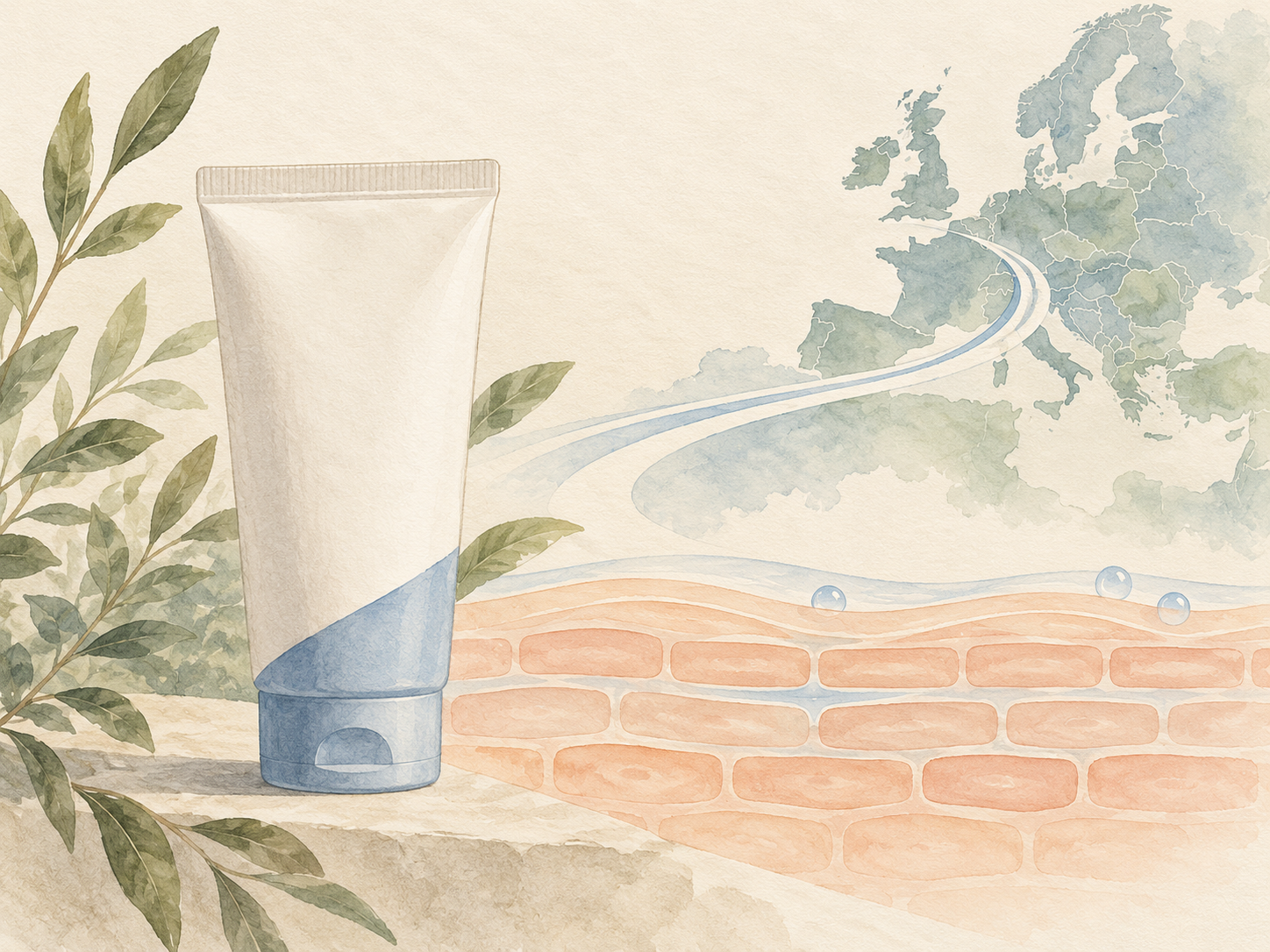
What the European announcements actually said
In its March 2026 launch announcement, Amorepacific described an online pre-launch in February and a sequential rollout to 680 Sephora stores across 17 European countries, including France, Germany, Italy and Spain.
The detail worth noticing is the merchandising: Aestura was to be a hero brand in Sephora's Skincare Trend Story campaign. The announced core range included Atobarrier365 Cream, Hydro Cera-HA Serum and Hydro Soothing Cream.
By its 10 August update, the company described a footprint of 860 stores in 19 European countries. Those are company-reported snapshots of the rollout, rather than proof that every store stocks every product or that European sales have reached a particular level.
The growth in those reported numbers is meaningful distribution news. Calling it a European consumer craze would require different evidence.
The useful shift is in what gets to represent K-beauty
A brand that began with hospital and clinic distribution is now being introduced through a trend campaign. That pairing is more interesting than the familiar story of a novelty product travelling abroad: a practical moisturiser is being presented as something to discover, rather than something to remember only when a routine becomes uncomfortable.
I like that choice. A reader can understand a moisturiser for dry skin without first learning a ten-step routine, decoding an unfamiliar treatment or chasing a new ingredient acronym. The Korean identity still matters, but it is attached to a recognisable job.
The serum and lighter Hydro Soothing Cream also make the launch more specific than “one famous cream arrives”. They present different formats within the same barrier and hydration story. They do not make the whole range a compulsory routine.
What is distinctive about the cream?
In Aestura's product information, the visible ceramide capsules melt as the cream is spread. The published ingredient list also includes glycerin, squalane, cholesterol and fatty acids. The cream's proposition combines moisture-attracting ingredients with a substantial moisturiser formula; the capsules give the brand a feature people can identify.
I would consider the cream when I wanted dry-skin comfort and the melting-capsule format appealed to me. For a lighter moisturiser, the Cream–Lotion comparison addresses the more useful next choice.