The two-finger rule is a useful reminder to apply a generous amount of sunscreen. It is not a personal SPF test. Two narrow lines squeezed from a small nozzle and two thick lines along longer fingers do not contain the same amount of product.
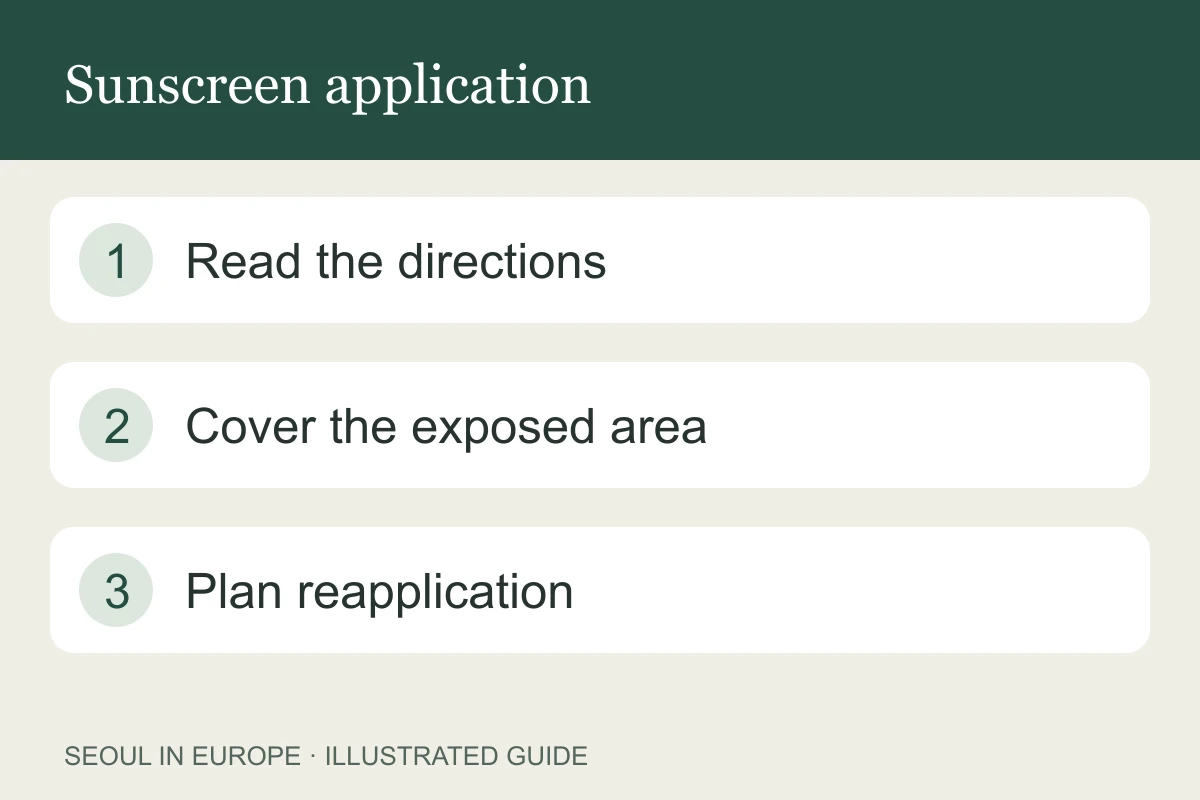
The area you cover matters too. A quantity you spread over the face alone is being asked to do a different job if you extend it over the neck and ears as well. Follow your sunscreen's application directions and aim for even coverage, rather than treating the finger count as a reason to stop early.
Why a simple rule helps, and where it runs out
I remember hearing that sunscreen should be applied in a coin-sized amount. I have caught myself using less than I intended because a generous amount felt like a lot to spread over my face. That is where a simple visual reminder can help, but a coin has no more universal size than a finger.
The practical challenge is finding a formula you can use at its directed amount, rather than collecting another memorable comparison. A tiny cosmetic dab and a high number on the bottle do not settle the application question.
The visual measure also changes with your hand, the width of the dispensed line and the formula's texture. A fluid can spread before you finish squeezing it out. A thicker cream can hold a very different-looking line. These differences are reasons to use the product's own guidance, not to invent a conversion that applies to every tube.
Nor does a high-SPF label tell you how little you can get away with. Our SPF and PA label guide explains what the labels describe. The amount you apply is a separate part of using that protection.
Make the application area explicit
Before dispensing, decide what you are covering: face, neck, ears and any other exposed areas. Do not quietly spread the same small portion further because you remember another area halfway through applying it.
The American Academy of Dermatology emphasises covering exposed skin, including easily missed areas, and applying sunscreen before going outdoors. That is a more useful routine than giving the forehead plenty of attention while leaving the ears out of the plan.
If a product is unpleasant at its directed amount, I would reconsider that formula rather than solve the texture problem by using less. A sunscreen that is comfortable only as a very thin makeup-like smear may not be a good fit for how you need to use it.
Keep makeup problems separate
If the directed amount pills under foundation, investigate the other layers and handling. Our sunscreen pilling guide deals with that problem without making a smaller sunscreen amount the solution.
Cushion foundation with SPF also does not provide a reliable arithmetic top-up to a guessed sunscreen dose. You cannot add the two printed SPF numbers together or infer the combined protection from how much makeup coverage you see.
Plan the next application too
The first application is not the whole day. The AAD advises reapplying around every two hours when outdoors and immediately after swimming or sweating, while following the product's instructions. Shade and clothing remain useful parts of the plan.
I would keep the finger rule as a prompt to pay attention to quantity, then make the rest of the routine specific: the product's directions, the exposed area and the next time it needs attention. A memorable shortcut is helpful when it supports those decisions. It becomes less helpful when it is mistaken for a measurement of the protection on your own face.