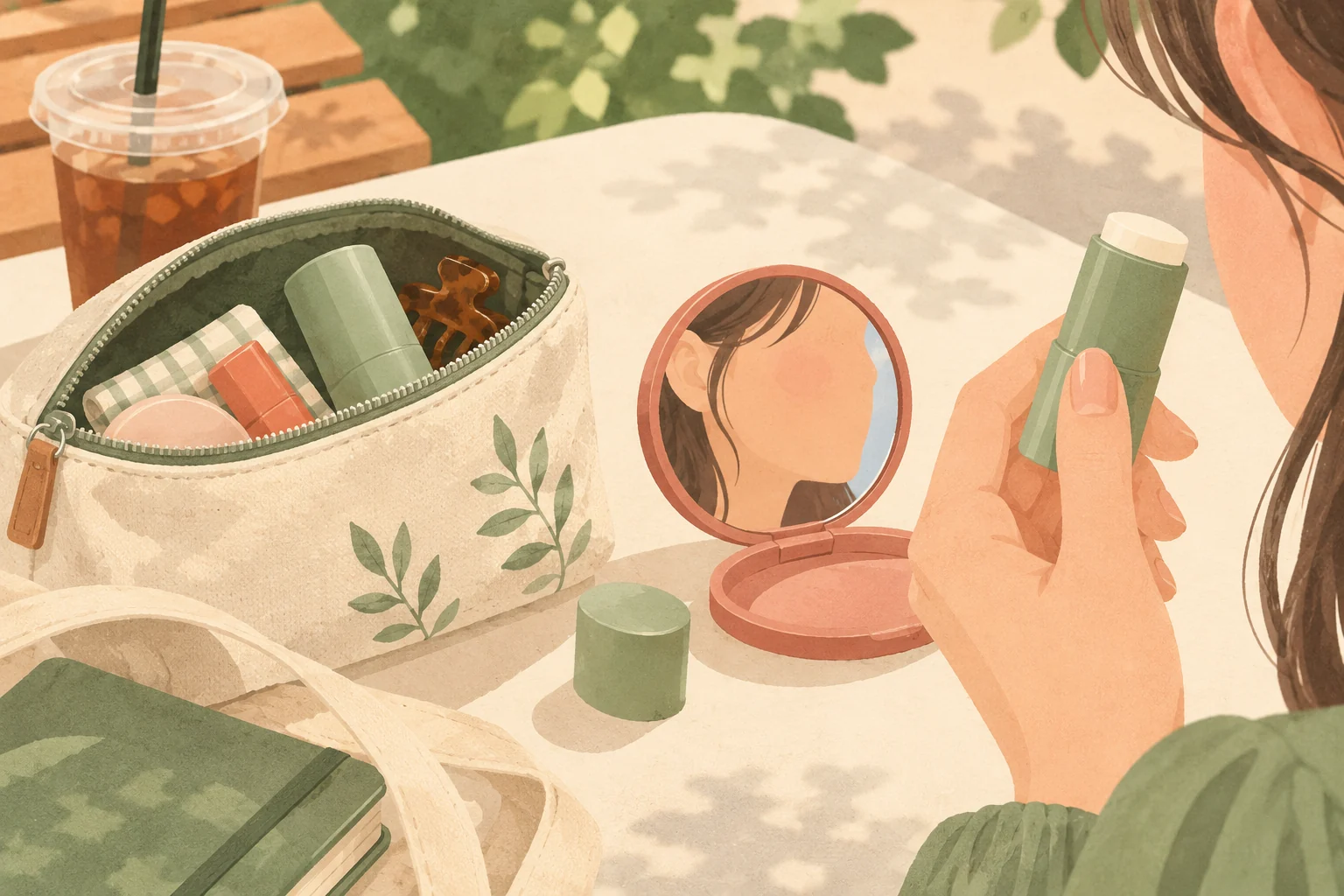
A sun stick can be used over makeup, but repeated application and evening out the layer can disturb the base underneath. Aim for an even layer, even if that means a little makeup touch-up afterwards.
In Korea, I have often seen people take out a sun stick and reapply it. The appeal makes sense to me: it is easy to carry, and you can use the stick without first squeezing sunscreen onto your hands. The ones I have used have felt comfortable, though the finish varies between products. That convenience is a real reason to consider one if carrying and reapplying a cream feels fiddly.
Makeup adds a second demand. You want another layer of sunscreen, but you also want the foundation underneath to stay where you put it. A convenient format still has to work with both parts of that routine.
Designed for makeup does not mean every base stays untouched
Korean skincare brand Beauty of Joseon describes its Matte Sun Stick: Mugwort+Camelia as a soft-matte option designed for reapplication, including over makeup. That is its intended use. Your particular combination of moisturiser, foundation, concealer and powder will still affect how the application looks.
A quick swipe on bare skin tells you whether the stick glides comfortably there. For a made-up face, the more useful trial is with the base you normally wear, when there is time to redo it if necessary. Look for visible movement around the nose and in areas where you use more concealer, rather than checking only a flat part of a cheek.
If the problem starts before reapplication and the morning layers are already rolling up, our sunscreen pilling guide addresses that separate layering problem. Reducing the amount of sunscreen is not the fix.
A light touch still needs adequate coverage
The American Academy of Dermatology's stick-sunscreen guidance recommends four back-and-forth passes over each area and rubbing in afterwards to produce an even layer. It also advises reapplication every two hours outdoors, or immediately after swimming or sweating.
Repeated passes and rubbing in are more involved than a single delicate swipe. That is worth knowing before choosing a stick specifically because you hope to avoid touching your makeup. A matte finish or the absence of a white cast cannot show that you have applied enough sunscreen.
Follow the directions on your product and include awkward areas as well as the centre of your face. A few strokes across the cheeks leave the edges unaccounted for. The application advice is a way to improve coverage, not a guarantee that a fixed number of strokes delivers the labelled SPF over any makeup.
Decide which part of the routine can change
For a lightly made-up day, accepting a little disturbance and touching up afterwards may be a reasonable trade. With an elaborate base that you will not disturb, a stick may be an awkward choice however nice its finish looks. I would choose the sunscreen application I can carry out properly, then plan the makeup around that.
You can also use different formats for the first layer and later applications. Keep a morning product that you can spread evenly, then decide whether the portable stick makes reapplication easier when you are out.
For the stick itself, Beauty of Joseon advises exposing only a little product at a time to avoid breakage. A heavily extended stick is unnecessary for a touch-up. Put the cap back on after use and follow the product's care instructions.
The convenience is worth having if it helps you reapply thoroughly. If protecting your makeup means applying almost no sunscreen, choose another method and plan the touch-up around it.