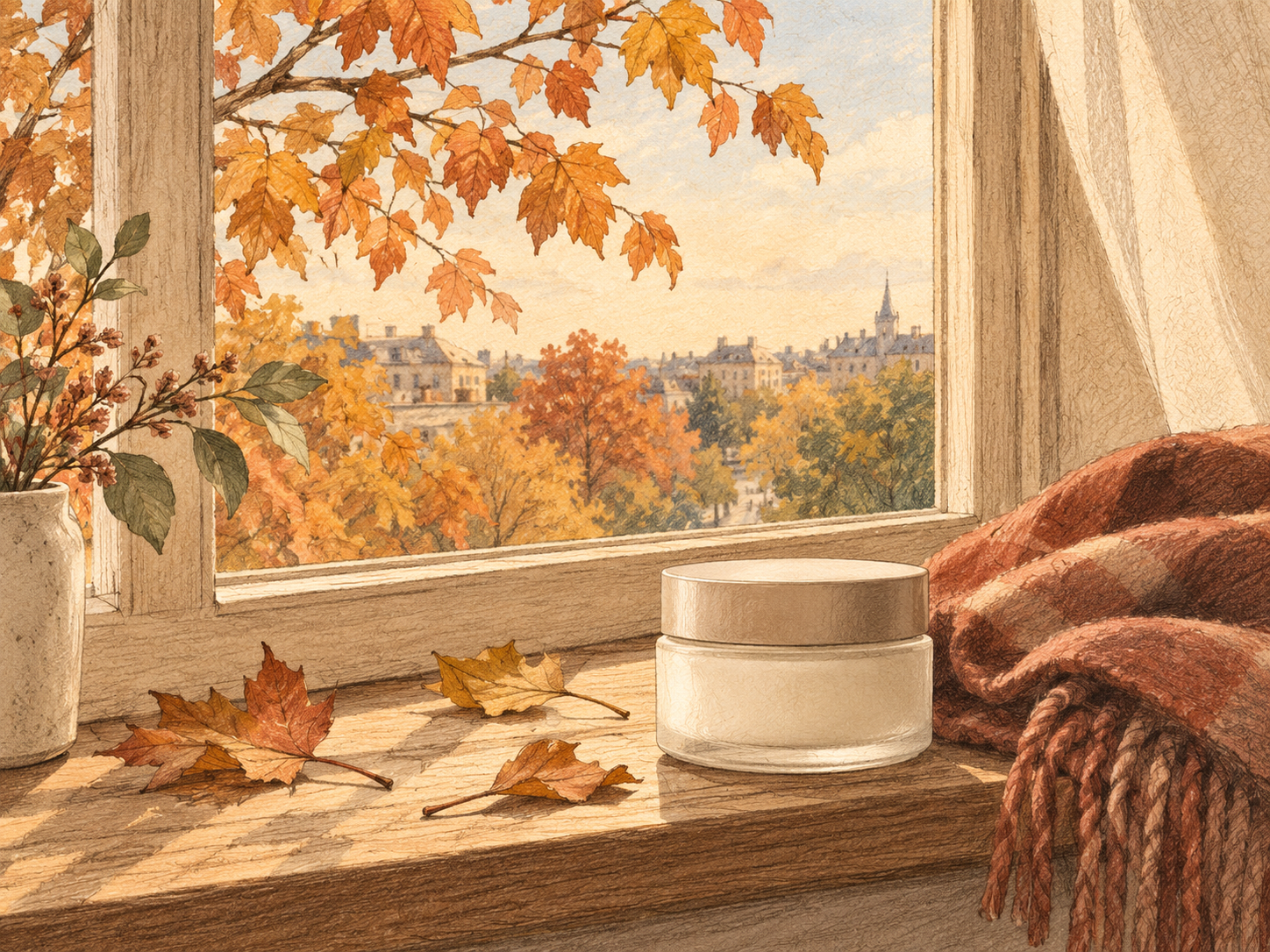
Your autumn routine doesn't need a new bottle for every falling leaf. If your skin still feels comfortable, keep what works. If it has started feeling tight, look at when that happens before adding another layer.
That small distinction is more useful than a blanket instruction to switch everything to richer products. Tightness straight after washing points you towards a different part of the routine from cheeks that feel dry halfway through a day in a heated office.
The change may be indoors
Cooler weather gets the attention, but dry indoor air matters too. Heating can leave rooms with lower relative humidity, increasing water loss from the skin's surface. A rainy street and a dry office can exist on the same day; the weather outside isn't a complete description of what your face experiences.
That doesn't mean everyone across Europe needs the same winter cream. A draughty flat, a warm office and a mild coastal autumn are different settings. I'd use the season as a prompt to reassess comfort, rather than a deadline for replacing products.
Find the step that needs attention
The timing helps you choose the change: address the wash when tightness begins immediately afterwards, and the moisturiser when comfort fades later. One clear adjustment is more useful than replacing the whole shelf for autumn.
For dry shins or rough upper arms, the body-skinification guide asks the same practical question below the neck: what does this area need, rather than how many steps can you add?
| What you notice | A useful place to start |
|---|---|
| Tightness immediately after washing | Review the cleanser, water temperature and how long you wash before adding more leave-on products. |
| Skin feels comfortable after moisturising but dry later | Reassess the moisturiser step, including whether a cream suits you better than your light lotion. |
| Only the cheeks feel dry | Keep the adjustment focused on that area rather than making the whole routine heavier. |
| A particular product repeatedly stings | Stop that cosmetic and reassess; extra hydration isn't a reason to keep applying it. |
The American Academy of Dermatology's dry-skin guidance supports gentle washing with warm water and moisturiser while skin is still damp. Those are useful changes before buying a serum.
Change the finish before multiplying the layers
A moisturiser helps hold moisture in the skin. The NHS explanation of emollients distinguishes lighter lotions from creams and thicker ointments; texture and how comfortably you can use a product matter.
For a cosmetic routine, I'd first consider whether the moisturiser you already own is doing enough. A watery toner and a serum can be enjoyable, but adding both doesn't automatically solve a finish that leaves you uncomfortable by lunchtime.
If the choice is between lighter and richer textures, the Aestura cream-versus-lotion comparison gives a concrete example of two products for the same moisturising step.
If you want an extra hydrating step, introduce one rather than changing the cleanser, serum and cream together. Keeping the rest familiar makes the result easier to interpret. Our skin flooding guide looks at that layering idea in more detail.
Dryness that persists, cracks or becomes painful deserves professional advice rather than an increasingly elaborate routine. If a prescribed treatment is involved, discuss changes with the prescriber.
The useful autumn reset is the one you can explain: this step stopped feeling comfortable, so this is what changed. A new season can justify a small adjustment. It doesn't need to become a shopping list.