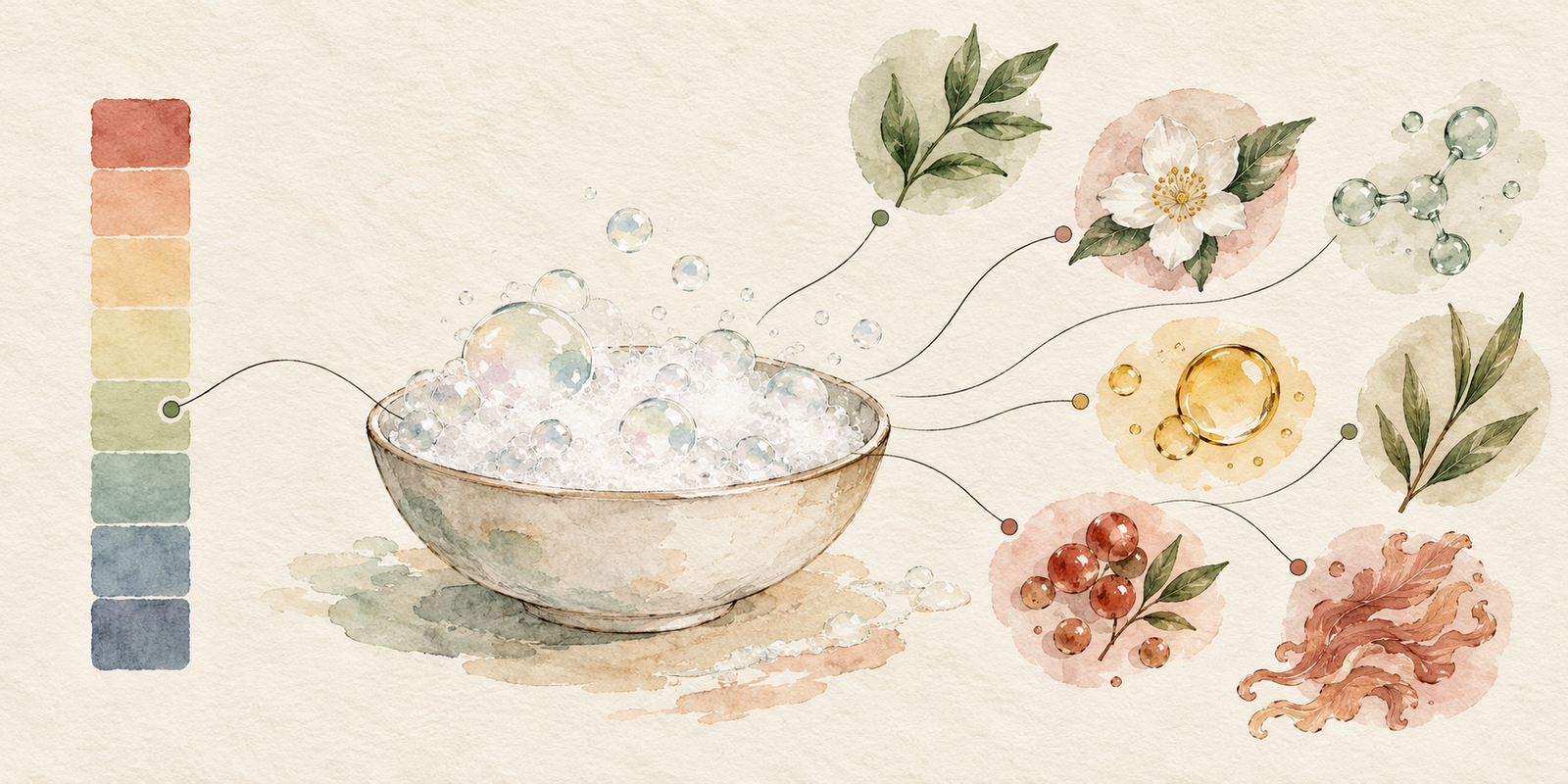
In a cleanser, “low pH” usually means mildly acidic rather than alkaline. pH describes how acidic or alkaline a water-based formula is. Seven is neutral; lower numbers are acidic and higher numbers are alkaline.
A mildly acidic pH is a useful starting clue, but the cleansing ingredients and the rest of the formula still matter. Choose a wash that removes what you need to remove and leaves your skin comfortable, rather than replacing a good cleanser just to get a lower number.
Why acidity became a selling point
Healthy skin has a mildly acidic surface, often around pH 4–6, rather than a neutral surface. That is the starting reason mildly acidic cleansers appeal to people who find traditional soap drying.
Traditional soap is usually alkaline, while synthetic-detergent cleansers can be made mildly acidic or near neutral. A review of soaps and synthetic cleansers explains why the cleansing ingredients and the pH both matter. For shopping purposes, a mildly acidic formula around pH 5–6 is a useful starting point; it is not a reason to reject every comfortable cleanser outside that band.
A cleanser is more than water adjusted to a particular pH. Surfactants are the ingredients doing much of the cleaning. Their interaction with the skin can change with the formulation and its pH, which is why a number alone cannot describe the whole wash.
What the COSRX example actually shows
COSRX is a Korean skincare brand with an ingredient-focused range. Its Low pH Good Morning Gel Cleanser makes the marketing idea unusually easy to inspect because the global page supplies a figure: pH 5.31 ± 1.00.
That specification places it in the mildly acidic range, with variation rather than one fixed 5.5 reading. The formula also includes cocamidopropyl betaine and sodium lauroyl methyl isethionate as cleansing agents, plus tea tree leaf oil and betaine salicylate. The ingredients explain the wash as well as the number.
Surfactants are the cleansing agents that help water lift away oil and dirt. Betaine salicylate has an exfoliating role; it is not the same as plain betaine, a moisturising ingredient. Cocamidopropyl betaine is another different ingredient, used here as a surfactant. Those similar names can be confusing, but a wash-off cleanser is still a brief cleansing step, not the equivalent of a leave-on exfoliating treatment.
I would consider the COSRX gel if I wanted this foaming, rinse-off format and was comfortable with its tea tree oil. If I wanted to avoid aromatic plant oils, I would look for a different cleanser even if this one had the pH I wanted. That is a more useful formula distinction than assuming every low-pH product is equally gentle.
The brand’s directions involve wetting the face and hands, foaming a suitable amount, gently massaging and rinsing. “Good Morning” does not require everyone to wash twice a day, just as “low pH” does not require choosing this particular gel.
Lower does not always mean gentler
pH affects how the skin and cleansing ingredients interact. A study of cleansing systems found that particular surfactant combinations could be more drying or irritating at a lower pH. The useful lesson is to judge the whole cleanser, rather than make every lower number a recommendation.
Between two otherwise suitable products, a skin-compatible pH is worth considering. But if a gel with the right number repeatedly leaves you tight and uncomfortable, I would choose a gentler-feeling formula instead of trying to compensate with several extra skincare steps. A comfortable rinse is more useful than winning a pH contest.
Judge the wash you actually need
Removing long-wearing make-up is a different task from a light cleanse. If an oil cleanser helps with that first job, a second water-based wash may fit your routine; double cleansing is not an obligation on every face. Our ma:nyo cleansing oil guide explains the first step separately.
I like following cleansing oil with a gel or foam because I prefer the finished feel. That makes the comfort of this second cleanser important: removing the slippery feel is the goal, not washing until the skin feels stripped. The ‘low pH’ label can help narrow the search, but the formula and how it leaves my skin still decide it.
Use the cleanser according to its directions, with gentle application and lukewarm water. Once you rinse, pay attention to comfort rather than aiming for a squeaky finish. Persistent stinging or tightness is a reason to reconsider the product and washing habits, not to find a toner that compensates for them.
If the whole routine feels uncomfortable, our skin barrier guide is a more useful next read than another pH leaderboard. Persistent irritation deserves appropriate advice rather than endless product swapping.
These are affiliate links. I may earn a commission if you buy through them, at no extra cost to you.
The COSRX Low pH Good Morning Gel Cleanser at Olive Young Global is the 150 ml single cleanser, not the Good Night peeling gel.
My preference is to keep pH in the decision, without letting it make the decision. An everyday cleanser should remove what you need to remove and leave you comfortable enough to get on with your routine. The lower number does not get the final vote.