When even moisturiser stings, adding a ‘barrier repair’ serum can feel like the obvious next move. I would first look at what the routine is asking your skin to tolerate. Another soothing label is not automatically another soothing experience.
Stinging can accompany an impaired skin barrier, but the sensation alone does not diagnose one. Irritation, allergy and conditions such as rosacea can also make skincare uncomfortable. That distinction changes the next step: reduce avoidable irritation and investigate persistent symptoms, rather than treating every sting as proof you need more barrier products.
What the barrier actually does
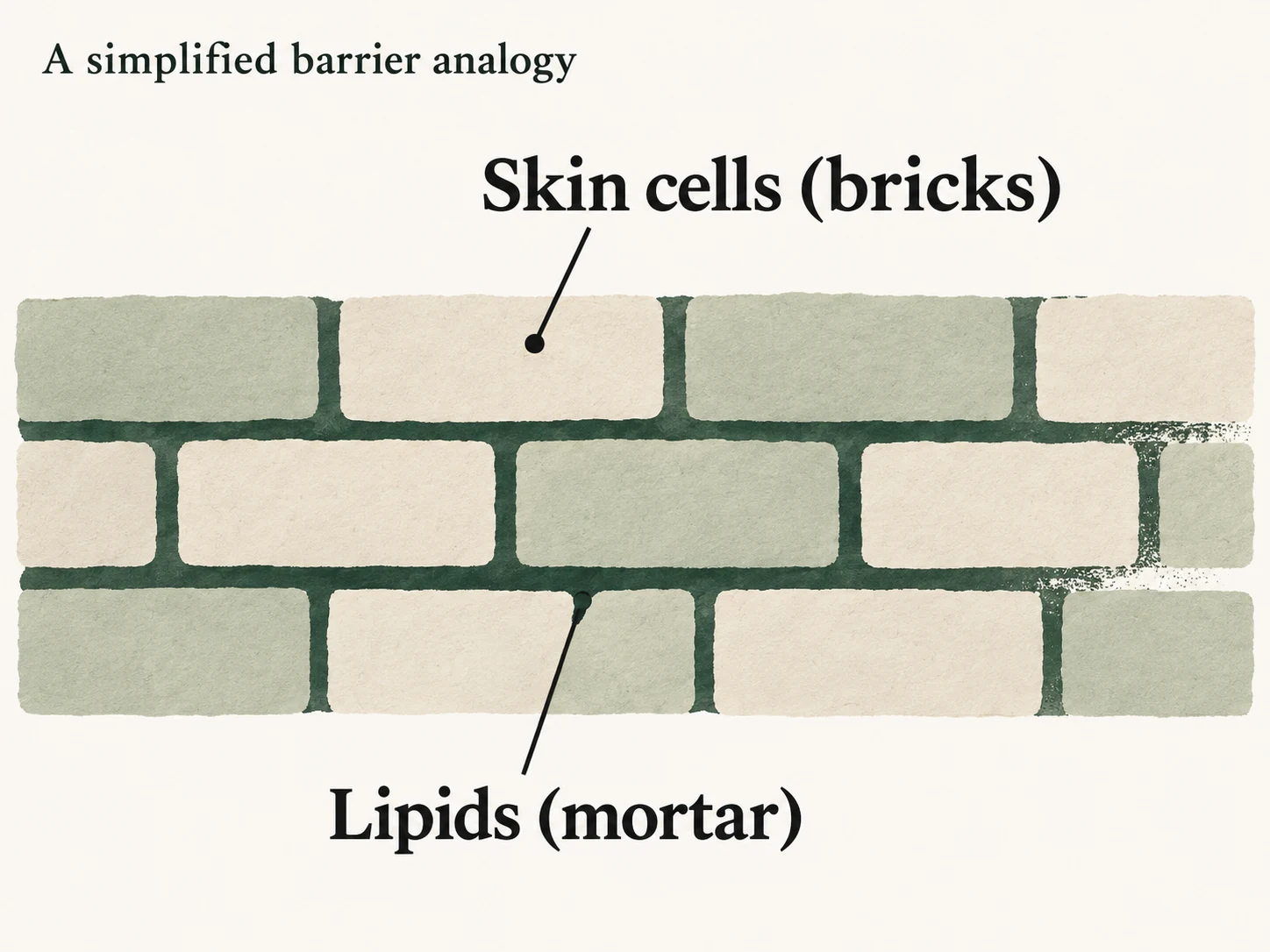
The skin’s outer barrier helps limit water loss and the entry of outside substances. Its outermost layer contains cells surrounded by lipids. The familiar brick-and-mortar picture is a useful way to imagine that structure, rather than a photograph of what a damaged face looks like.
The ingredients have different moisture jobs. Glycerin draws water into the outer skin; emollients soften it; occlusive ingredients slow water loss. Ceramides are lipids used to support that moisture barrier. These roles explain what a barrier cream is trying to do, but do not identify why your particular skin is stinging or guarantee that any ceramide cream will feel comfortable.
For seasonal tightness rather than stinging, the autumn skincare guide separates what to change after washing from what to change when your skin feels dry later in the day.
Start with what changed
A routine can become more demanding without a single dramatic new purchase. Using an exfoliant more often, cleansing for longer or combining several active products can change the exposure your skin gets.
Think through the sequence before choosing a replacement:
| What changed? | A useful question |
|---|---|
| You added a product or increased its frequency | Did discomfort begin afterwards? |
| You started layering several treatment steps | Can you identify which one causes the sting? |
| Skin feels tight immediately after washing | Are the cleanser, water temperature or amount of cleansing too much? |
| A product repeatedly burns, or symptoms keep returning | Could this need an assessment beyond a routine adjustment? |
This is a way to organise the history, not a home diagnosis. DermNet’s sensitive-skin guidance explains why similar sensations can have different causes, including irritant and allergic contact dermatitis.
Give the routine a less ambitious job
For ordinary cosmetic care, a calmer starting point is gentle cleansing, a moisturiser you can use comfortably and sun protection. Cleveland Clinic’s dermatologist guidance supports mild cleansing, avoiding hot water and over-cleansing, and keeping skin moisturised.
Pause non-essential cosmetic exfoliants and treatment layers that are causing discomfort. If a prescribed treatment is involved, ask the prescriber how to adjust it. Reducing a crowded routine does not require abandoning moisturiser or sun protection.
I would also resist buying a barrier toner, serum and cream all at once. Three new formulas make it harder to learn what suits you. If your existing moisturiser is comfortable, the word ‘repair’ on a replacement is not a reason to switch.
What improvement should mean
A useful cosmetic goal is a routine that feels comfortable again, without recurring burning or worsening redness. There is no single recovery deadline that applies to every cause of stinging. A cream cannot tell you whether the original problem was excessive exfoliation, an allergy or something else.
If irritation persists, worsens or keeps returning, seek advice from a pharmacist or clinician. That can be more useful than repeatedly changing products in search of the right barrier label.
This is an affiliate link. If you buy through it, I may earn a commission at no extra cost to you.
One barrier-moisturiser example is Aestura Atobarrier 365 Cream 80 ml set (+25 ml toner and three 3 g cleansing-foam sachets) at Olive Young Global. The link includes extras; the simpler routine above does not require using them.
The barrier is real biology. ‘Barrier repair’ is also a product description. Keeping those two ideas separate makes the routine easier to rethink: start with tolerable care, remove avoidable irritation and find out why unresolved symptoms remain. A calmer face is the point, not a more impressive repair collection.